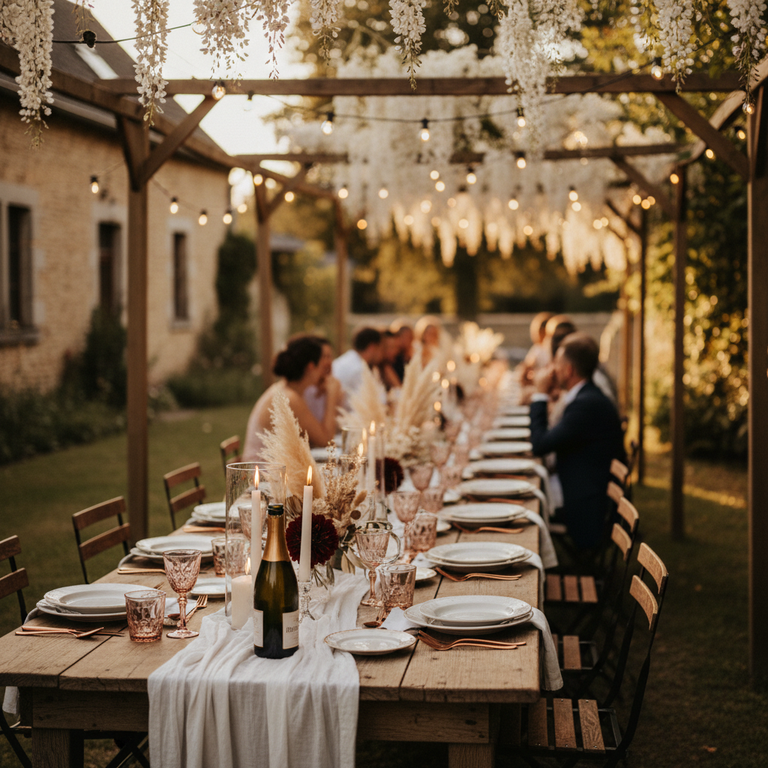
Destination Wedding from Belgium: The Disaster-Proof Checklist

Article summary
Legal framework, recognition of the act, consular certificates, guest management and real budget: the concrete checklist for getting married abroad from Belgium without any unpleasant surprises.
Summarise with AI
Saying 'I do' with your feet in the sand in Italy or on a terrace overlooking the Atlantic is a dream for many. And an increasing number of Belgian couples are taking the plunge. But behind the postcard image, there's an administrative reality that nobody tells you about on Pinterest.
Organising a destination wedding from Belgium means dealing with two administrations at once: that of the country where you're celebrating, and your own, which doesn't let go even when you're 2,000 km away. The most common sticking point? Many couples return convinced they're married. Legally, they aren't always.
This guide provides a concrete checklist: the Belgian legal framework, the recognition of the certificate upon return, the documents local councils require, guest logistics, and the real budget. No inspiring fluff. Just concrete information, country by country.
This article deals with practical and administrative aspects. For the exact legal value of your situation (mixed couple, assets abroad, shared children), speak to your local council or a notary. We provide a general framework, not personalised legal advice.
Destination weddings: who are they for?

Let's be clear on one point: a destination wedding isn't just a Belgian wedding that's been moved. It's a different format. Often smaller, longer, more oriented towards a "weekend with loved ones" than a "big celebration with 120 people".
The couples we see going abroad fall into three categories: a family connection in the country (Italian, Portuguese, Greek origins), the desire to guarantee sunshine, or the wish to gather loved ones for several days. Frankly, this last profile benefits the most, because they embrace the "collective trip" aspect rather than a "rushed ceremony".
If you're aiming for something small, many of the codes of an intimate wedding apply: it's about the experience, not the numbers. The difference is that for a destination wedding, every guest becomes a traveller. And that changes everything.
The forgotten rule: the Belgian civil wedding remains the foundation
Here's the most costly mistake, the one that keeps coming up. A couple goes to Tuscany, signs a document in front of a local officiant during a lovely ceremony, returns to Belgium, and discovers months later that, as far as the administration is concerned, they are still single.
Why? Because not all ceremonies abroad result in a recognised civil certificate. Some are purely symbolic. According to the official portal belgium.be, a wedding celebrated abroad is only valid in Belgium under two conditions: you meet the Belgian legal requirements, and the wedding was celebrated according to the usual forms of the country. A blessing on the beach by a friend does not fall into this category.
On paper, a destination wedding from Belgium therefore begins with a fundamental decision: either a real civil wedding in the country (before the competent authority), or a visit to a Belgian local council before departure. Many choose the second option: a quiet Belgian civil wedding at home, followed by a big ceremony abroad for the celebration. This is the simplest option, and it secures everything.
If you are Belgian, Belgian law applies to your civil status, even if you reside or get married abroad. Your capacity requirements (age, absence of impediment, consent) remain those of the Belgian Civil Code.
Even before booking a sunny venue, complete the Belgian part. Our guide on Belgian civil wedding documents details what your local council expects from you. This is the foundation. Everything else is built upon it.
Recognising your certificate upon return: transcription, legalisation, apostille

Let's say you had a real civil wedding in Greece. You hold a Greek certificate in your hands. Now what? You need to have it recognised in Belgium, otherwise it remains invisible to your local council, your health insurance, and the tax authorities.
Transcription in Belgian registers is not strictly mandatory. But belgium.be is clear: it is highly recommended, because without it, every certificate extract will have to be requested again from abroad. This can be long, sometimes costly, and always annoying.
For the certificate to be recognised, three conditions must be met consecutively. It must have been issued by the competent local authority, in the usual form of the country. It must be legalised or bear an apostille. And if it is written in a foreign language, a translation by a sworn translator is required, whose signature must also be legalised.
Destination wedding from Belgium: the 4 essential documents
What exactly is an apostille? It's a simplified and faster version of legalisation, provided for by the Hague Convention. For signatory countries (Italy, France, Portugal, and Greece all are), a single apostille stamp is sufficient where classic legalisation would require a double passage through consulates. The SPF Justice portal details the cases. Good news: within the EU, this is the most frequent and lightest scenario.
No impediment, certificate of custom: the invisible paperwork
Now, we are entering an area that 90% of blogs skip. Even before you can get married in your chosen country, the local authority will often request Belgian documents. Two come up repeatedly.
Certificate of no impediment to marriage
- What it is: a certificate proving that there is no obstacle to your union (not already married, no legal impediment).
- Where to obtain it: from the Belgian embassy or career consulate in the country.
- The trap: in certain countries, you must reside in Belgium to receive correspondence related to the application. A written formality, mandatory, that is discovered too late.
Certificate of custom
- What it is: a document outlining the provisions of the Belgian Civil Code on marriage, so that the foreign authority knows what rules apply to you.
- Where to obtain it: from the FPS Justice.
My advice, in my opinion the most important of the entire article: contact the foreign authority that will celebrate the wedding before fixing anything. It is they, and they alone, who will tell you the exact list of documents. belgium.be reiterates: to find out what to provide, contact the non-Belgian authority celebrating the union. Each country has its own list, its own deadlines, its own required translations.
Last point: Belgians residing abroad must notify the Belgian consulate of any change in civil status, which is responsible for registration in the National Register. If you live in Belgium and are just leaving for the ceremony, civil registration with the local council will play this role upon your return.
Italy, France, Portugal, Greece: what changes

The favourite quartet for Belgian couples is Italy, France, Portugal and Greece. These lines give the general idea, not the official procedure, which should always be verified with the relevant consulate.
Italy. The star (Tuscany, Lake Como, Puglia). The administration generally requires a certificate of no impediment, the famous "nulla osta", via the Belgian consulate. Allow plenty of time: Italy loves documents.
France. Neighbouring, convenient for guests, common language. But it strictly regulates civil weddings for non-residents, often conditional on a link (parental residence). Many Belgian couples therefore hold a humanist or religious ceremony there, and keep the civil wedding in Belgium.
Portugal. On the rise (Lisbon, the Algarve, the Douro). Known for relatively smooth administration and better value for money than Italy. Translation and apostille are still required.
Greece. The Cyclades, the light, that blue. An appealing setting, but island logistics complicate everything: a missing document in Santorini cannot be sorted out in twenty minutes. Plan generously and double up on copies.
Keep a cool head with a checklist that misses nothing
Belgian documents, translations, consulate contacts, chasing up travellers: a destination wedding involves fifty threads to hold. Turn the list in this article into an interactive checklist and centralise your guests in one place.
Create your couple space →Your guests: the logistics that make or break the party
 POP PRODUCTIONS
A guest at a Belgian wedding drives their car in the morning and returns home to sleep. A guest at a destination wedding takes leave, buys a flight, books accommodation, sometimes has their children looked after for a week. You are not sending an invitation. You are asking for an investment.
Therefore, two golden rules. Give plenty of notice (a save-the-date twelve to eighteen months in advance, not three), and be transparent about the cost for them. A negotiated block of rooms, an airport shuttle, a list of accommodations at various price points: these gestures make a real difference to attendance rates. Centralising all of this in your online guest list avoids multiple versions of Excel files.
Regarding memories, many couples prefer to bring their own supplier rather than looking for one on site, in a language they don't master. A Belgian videographer like POP Productions, a filmmaker since 2008, films the wedding like a short film and follows you wherever you celebrate. The advantage is twofold: you know their work, and communication is seamless. Our guide on the price of a wedding photographer in Belgium provides benchmarks that are also valid when travelling abroad.
Finally, consider the schedule, which often spans several days at a destination. A hour-by-hour planner shared with travellers (arrival the day before, brunch the day after) prevents anyone from wandering around an unknown village looking for the party.
The Real Budget, Compared to a Belgian Wedding

The myth is that a destination wedding always costs more. The reality is more nuanced. For the couple, the bill is often lower: fewer guests are invited, and some countries have lower supplier prices than ours. For the guests, the cost increases: they pay for flights and accommodation.
The real expenses not to underestimate? Scouting trips (one to two times before the big day), the travel expenses of your suppliers if you bring them along, translations and legalisations, and a larger contingency margin. Because from a distance, any hitch is more expensive to resolve.
Items specific to destination weddings
To establish a quantified comparison base and maintain control, refer to our Belgian wedding budget guide. The idea is not to copy the amounts, but to start from a known cost structure, then add the lines specific to travel. And to track everything in the centralised budget rather than in your head.
The Clever Alternative: Southern Decor, Without Leaving Belgium
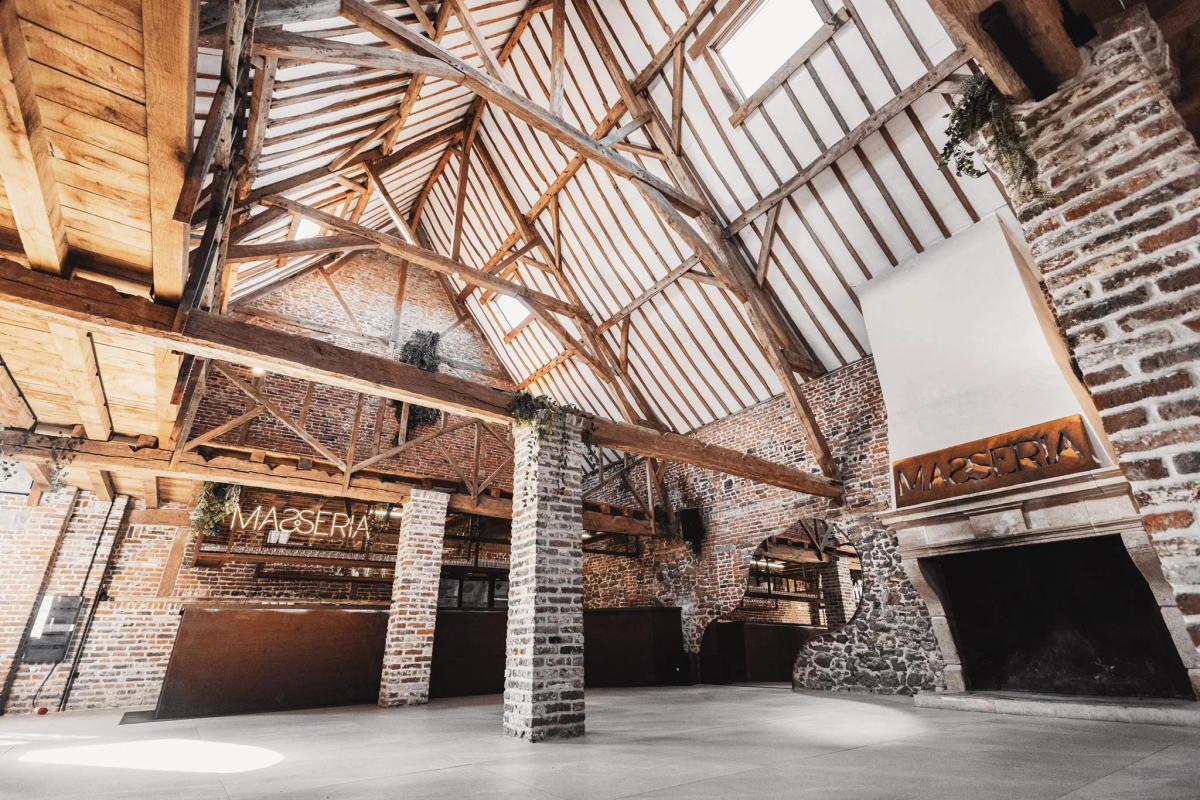 LA MASSERIA
Before booking Italy, ask yourselves the real question: is it the country you want, or the ambience? Because if it's the ambience, Belgium has a few cards to play, without imposing a trip on your entire family.
Venues like La Masseria, in Thuin, play the Southern card: an old stone building, exposed beams, volumes reminiscent of Mediterranean farms. With terracotta decor, potted olive trees and a caterer focused on sun-kissed cuisine, you get 80% of the Italian postcard, without the hassle of foreign paperwork or the transport bill for 60 people. Honestly, for many couples, it's the best compromise.
It doesn't replace the experience of a real group trip, let's be fair. But it avoids half of the hassles in this article. If the idea appeals to you, browse the directory of Belgian suppliers to spot venues with strong character, and draw inspiration from our selection of castles for weddings in Wallonia, where several estates offer that extra soul.
Are you more inclined towards a real getaway in the sun, or a Southern-style decor in Belgium without the foreign paperwork? 👇
Frequently Asked Questions about destination weddings from Belgium
Is a wedding celebrated abroad recognised in Belgium?
Yes, under two conditions: you must meet the Belgian legal requirements to get married, and the wedding must have been celebrated according to the usual forms of the country. A purely symbolic ceremony (blessing on the beach, officiant without civil authority) does not create a recognised marriage. If in doubt, many couples secure it by first having the civil wedding in Belgium.
Do you need to transcribe the foreign marriage certificate in Belgium?
This is not mandatory, but it is highly recommended. Without transcription in the Belgian registers, you will have to request each copy of the certificate from abroad, which is often time-consuming and costly. Transcription is done at the local council, after recognition of the certificate.
What is an apostille and when do you need one?
An apostille is a simplified version of legalisation, as provided for by the Hague Convention. For signatory countries (including Italy, France, Portugal, Greece), a single stamp is sufficient to authenticate the document, without double passage through consulates. This is the most common scenario within the EU.
Which Belgian documents does the foreign authority request?
Very often a certificate of no impediment to marriage (via the Belgian consulate) and a certificate of custom (via the FPS Justice), which sets out the applicable Belgian law. The exact list depends on the country: always contact the authority celebrating the wedding before setting the date.
How long should you allow to organise a destination wedding?
Allow 12 to 18 months, especially to notify guests early enough and complete administrative formalities. The deadlines for translation, apostille, and obtaining consular certificates quickly add up, and a missing document from a distance cannot be resolved in a day.
Does a destination wedding cost more than a Belgian wedding?
For the couple, often not: fewer guests are invited, and some countries are cheaper. For the guests, yes: they pay for flights and accommodation. The expenses not to forget for the couple are scouting trips, the travel expenses of brought-in suppliers, translations, and a larger contingency margin.
This article is based on official information from belgium.be (getting married abroad, recognition and transcription of deeds), the FPS Justice (legalisation and apostille) and the FPS Foreign Affairs (civil status of Belgians abroad). The country-specific elements give the spirit of the procedures and must always be verified with the competent Belgian consulate. Budget estimates reflect our reading of the market and feedback from Belgian suppliers with whom we interact, not official statistics.