Eco-responsible wedding in Belgium: what really changes (and what is greenwashing)

Article summary
Bamboo straws or real impact? What truly reduces a wedding's footprint in Belgium (transport, food, flowers) and what is just greenwashing.
Summarise with AI
Type "eco-friendly wedding" into Instagram and you'll find bamboo straws, biodegradable confetti, and small "zero waste" signs engraved in wood. It's pretty. It's reassuring. And it changes almost nothing about the actual footprint of your day.
Belgium celebrated 48,589 weddings in 2024, a record since the start of the century according to StatBel. So many couples are now asking themselves about their impact. The problem isn't goodwill: it's that attention is almost always focused on the wrong areas.
This guide to eco-responsible weddings in Belgium sorts out the levers that truly make a difference from those that mainly decorate your feed. Without guilt, without mincing words, and by acknowledging a couple of things that go against what you read everywhere else.
The goal of this article is to help you focus your energy (and your budget) on the 20% of decisions that make 80% of the impact. The rest are bonuses. Nice to have, but still bonuses.
Eco-responsible wedding Belgium: the real ranking
Let's start with the data that puts everything into perspective. According to ADEME, for a wedding of about a hundred people, guest transport and the meal alone account for around 80% of emissions. The rest (decorations, flowers, stationery, outfits) share the remaining portion.
The two heaviest items are also the ones least talked about in "green wedding" checklists. Straws and confetti, meanwhile, fall into the last few per cent. It's like sorting your emails while leaving the heating on full blast with the windows open.
Where a wedding's footprint comes from
Guest transport: the item no one looks at

Individual cars, sometimes a few guests flying in for two days: this is what makes the meter explode. Good news: this is the area where you have the most influence, without sacrificing anything of the celebration.
The first lever is a single wedding venue. A ceremony in the estate's park, a drinks reception and dinner on-site: you eliminate the journey from the town hall to the reception venue that 120 people would have made in a scattered fashion. The second is group transport. Belgian distances are short: a bus chartered from a central station, Namur, or the Brussels-Liège axis, costs less than one might think and handles the return journey at the end of the evening.
The most taboo lever remains: the number of guests. Each guest means a journey, a place setting, a chair. Reducing from 150 to 80 people doesn't just cut the bill; it mechanically lightens the entire day. If this format appeals to you, we detail the logistics in our guide to intimate weddings in Belgium. And your centralised guest list helps organise carpooling by area.
The meal: where one choice changes everything
 BELGOBON
Here's the figure that should guide your menu. According to ADEME, a beef-based meal accounts for around 6 to 7 kg of CO2, compared to approximately 0.5 kg for a vegetarian meal. A ratio of one to fourteen. No one is asking you to make your wedding tofu-only. But replacing beef with poultry, fish, or a carefully prepared vegetarian dish dramatically reduces the meal's footprint.
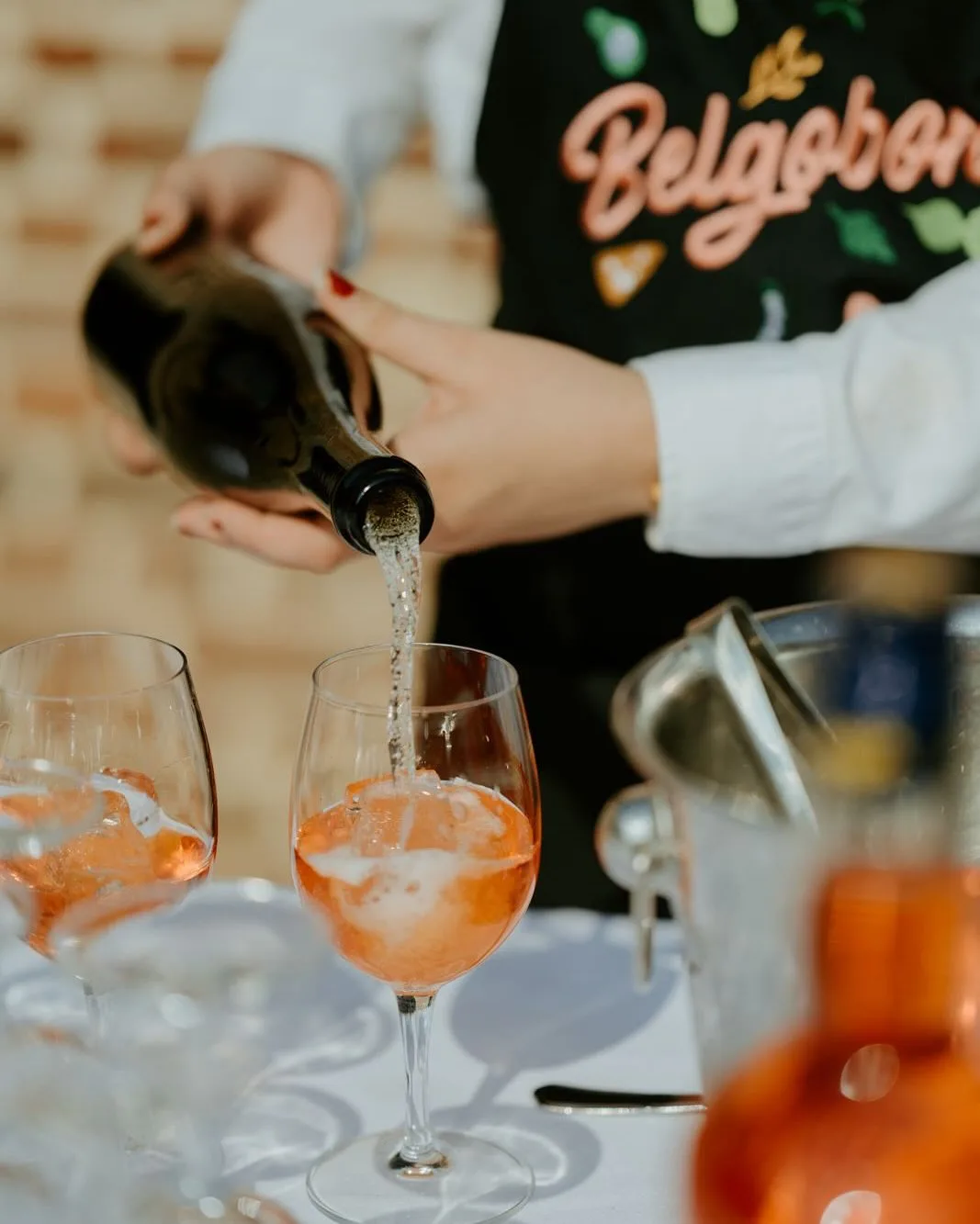
Second lever: short supply chains and seasonality. A caterer who sources from nearby producers reduces travel distances and production energy. In Brussels, Belgobon prides itself on homemade cuisine using local and seasonal products, with a significant organic component, and even offers delivery by cargo bike. This kind of practical approach matters more than a "green" logo on a brochure.
Third lever, often overlooked: waste. In Belgium, nearly a third of food produced ends up in the bin, a waste that Bruxelles Environnement documents every year. At a wedding, this comes down to practicalities: adjusting quantities to confirmed guests, planning for the recovery of unsold items, avoiding an extravagant buffet where half goes to waste. Our list of questions to ask a wedding caterer in Belgium helps compare two quotes on these points.
Flowers: The False Friend of "Local"
 ECHLOSION
Here, be careful of the trap. We constantly hear that local flowers are essential. This is generally true, but the shortcut "local = ecological" is false. A flower grown in a heated greenhouse in the middle of winter can have a heavier environmental impact than an imported flower, as heating can sometimes cost more energy than transport. The real criterion isn't the country of origin: it's the season and the cultivation method.
Concretely, a seasonal flower grown outdoors at the time of the wedding almost always beats the rest. Imported cut flowers, on the other hand, travel massively by air, which heavily impacts their carbon footprint. Frankly, the best approach is simple: ask your florist what's in season on your date, and build your colour palette around that.

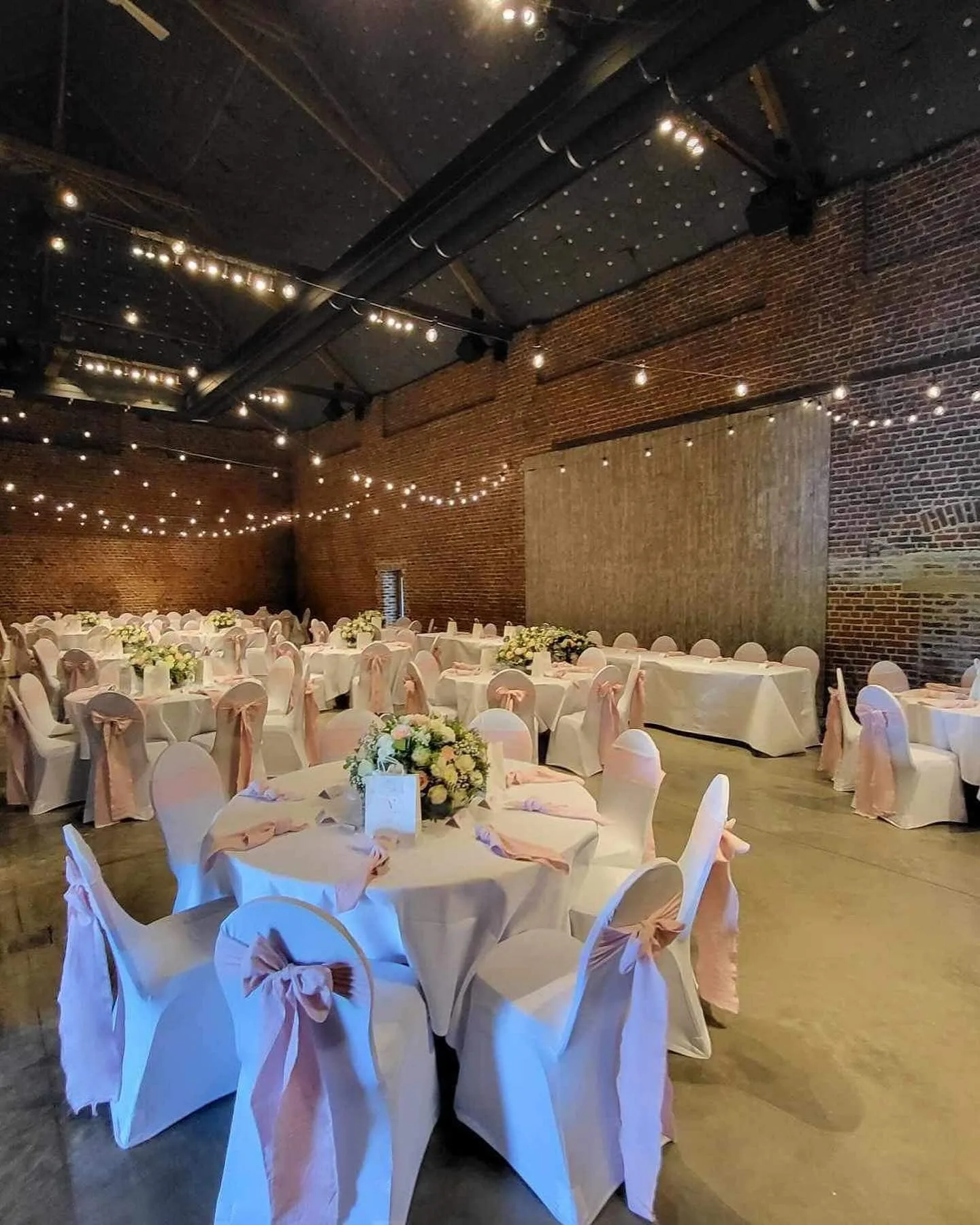
Reuse also helps. Ceremony arrangements can move to the reception venue, large pieces become centrepieces, potted plants go home with you or your guests. A floral workshop like Echlosion in Waterloo creates this type of bespoke arrangement. For services, prices, and questions to ask, see our article on wedding florists in Belgium.
Rent, Reuse, Source Second-hand

A wedding involves a mountain of single-use items. The right approach: rent rather than buy. Furniture, crockery, glassware, tablecloths, arches, photo booths, everything can be rented in Belgium, and most venues have their partners. Reusable crockery, even if washed, is preferable to so-called "compostable" disposables, which require an industrial chain rarely available on site.
Second-hand items have changed status. Sourcing your decorations from Belgian platforms, reusing jars and candle holders from a previous wedding, has become common and budget-friendly. Our ideas for 2026 decoration trends lend themselves very well to renting and reusing.

What about the outfit? A dress worn for a few hours is the perfect symbol of a single-use item. Outlets, specialised second-hand shops, and dress rental services exist all over Belgium, offering designer pieces at a fraction of the price. The same logic applies to suits: a beautiful rented or second-hand piece, altered by a good tailor, is perfectly suitable for a day.
Wedding Invitations: Paper or Digital?

This is a much-debated topic, although it only accounts for a small part of the total environmental impact. No, digital isn't magically neutral: servers and data centres consume energy. But for 80 guests, the difference between a digital invitation and a hundred cards remains minimal compared to transport and the meal.
If you prefer paper, as many Belgian couples do, two simple actions suffice: choose recycled paper or seed paper (which can be planted to grow flowers), and most importantly, avoid over-printing. One invitation per household, not one per person. The real waste is the extra box of cards that ends up at the back of a drawer. We detail the timing and Belgian workshops in our guide to wedding invitations in Belgium.
Look for Belgian suppliers who work locally
Seasonal caterers, florists who follow Belgian blooms, furniture rental companies: the WeWED directory brings together suppliers active across Belgium, freely accessible.
Browse the supplier directory →Greenwashing: what's reassuring but makes no difference
Wedding greenwashing isn't usually malicious. It's a mismatch between visible effort and actual impact. A typical case: a couple showcases their bamboo straws on Instagram, while 200 guests each arrive by car and beef is served everywhere. The intention is good. The effect, almost nil.
The most common cosmetic gestures? Alternative straws, 'eco-friendly' confetti, a small wooden sign announcing the approach, or a single green action put on display to reassure oneself. There's nothing wrong with doing them. But don't confuse them with a real reduction in footprint. In my opinion, a wedding that doesn't claim to be 'eco-friendly' but groups its guests and lightens its menu is better than a wedding covered in green labels on details.
Your levers, from strongest to weakest
Pick one or two levers from the top of this list and you're already doing better than most weddings that call themselves 'green'. The rest will follow, at the pace of your budget. To keep all this clear, centralise your budget, your guests and your suppliers in one place: trade-offs become simpler.
And you, which lever are you ready to use first: the number of guests, the menu, or something else? 👇
Frequently Asked Questions about eco-responsible weddings
Does an eco-responsible wedding in Belgium cost more?
Not necessarily, and often the opposite. The most effective levers, reducing the number of guests, lightening the meat content of the menu, renting instead of buying, thrifting decor, all reduce the bill. It's mainly certain premium 'organic' suppliers that cost more, not the approach itself.
What pollutes the most in a wedding?
Guest transport is by far the biggest contributor, accounting for around half of emissions according to ADEME, followed by food and drinks. Together, they account for approximately 80% of the footprint. Decor and flowers, which are often discussed, remain secondary.
Are local flowers really more ecological?
Not automatically. A flower that is local but grown in a heated greenhouse can have a higher impact than an imported flower. The right criterion is season and open-ground cultivation, not just the country of origin. Ask your florist what is in bloom during your wedding month.
Should meat be removed for an ecological wedding?
No, but reducing it has a huge effect. A beef meal weighs about fourteen times more than a vegetarian meal according to ADEME. Switching to poultry, fish, or a well-prepared vegetarian dish, at least for part of the menu, is enough to significantly reduce the plate's footprint.
Is a digital wedding invitation more ecological than paper?
Slightly, but the difference is small. Digital also consumes resources (servers, data centres). For a wedding, the impact of the wedding invitation remains marginal compared to transport and food. If you choose paper, opt for recycled or seed paper and avoid over-printing.
How to reduce the footprint of guest transport?
Three levers: grouping the ceremony and reception in one location, organising shuttles or carpooling from a central point (Belgian distances lend themselves to this), and limiting the number of guests travelling long distances. This is the heaviest item, so it offers the greatest gains.
This article is based on official sources and assumed orders of magnitude: StatBel for the number of weddings in Belgium, ADEME for the distribution of emissions and the carbon footprint of meals, Brussels Environment and the Walloon State of the Environment for food waste. The ranges for flowers and decor are based on market observations, not certified measurements: adapt to your situation. Sources: statbel.fgov.be, agirpourlatransition.ademe.fr, impactco2.fr, environnement.brussels, etat.environnement.wallonie.be.