Wedding florist in Belgium: bouquet, floral decor, budget and questions to ask

Article summary
The florist sets the visual tone for the wedding. What a floral service covers, seasonal flowers in Belgium, the budget item by item, and questions to ask before signing.
Summarise with AI
Flowers are often the last thing couples book. You’ve booked the venue, signed the caterer, chosen the photographer, and then you think you’ll deal with the rest "later". But the florist is the one who sets the visual tone for the whole day: the bouquet that appears in 80% of the photos, the ambience of the tables, the arch under which you’ll say "I do".
And here in Belgium, two things change the game compared to what French blogs say. First, the seasonality of our climate: your dream peonies won’t grow in September, full stop. And then there's the rise of a real network of Belgian growers, the slow flowers movement, which reshapes the landscape in terms of both budget and environmental footprint.
This guide covers what a floral service really entails, the flowers available month by month in Belgium, the budget item by item, and a checklist of questions to ask before signing. All illustrated by the work of Belgian florists active on WEWED, so you can see what it looks like in reality.
The prices mentioned below are approximate figures observed in the Belgian market at the beginning of 2026, not an official price list. The cost of a floral arrangement depends so much on the season, varieties, and volume that only a quote from your florist is truly accurate. Use these ranges to frame a discussion, not to negotiate down to the last penny.
What a floral service really covers
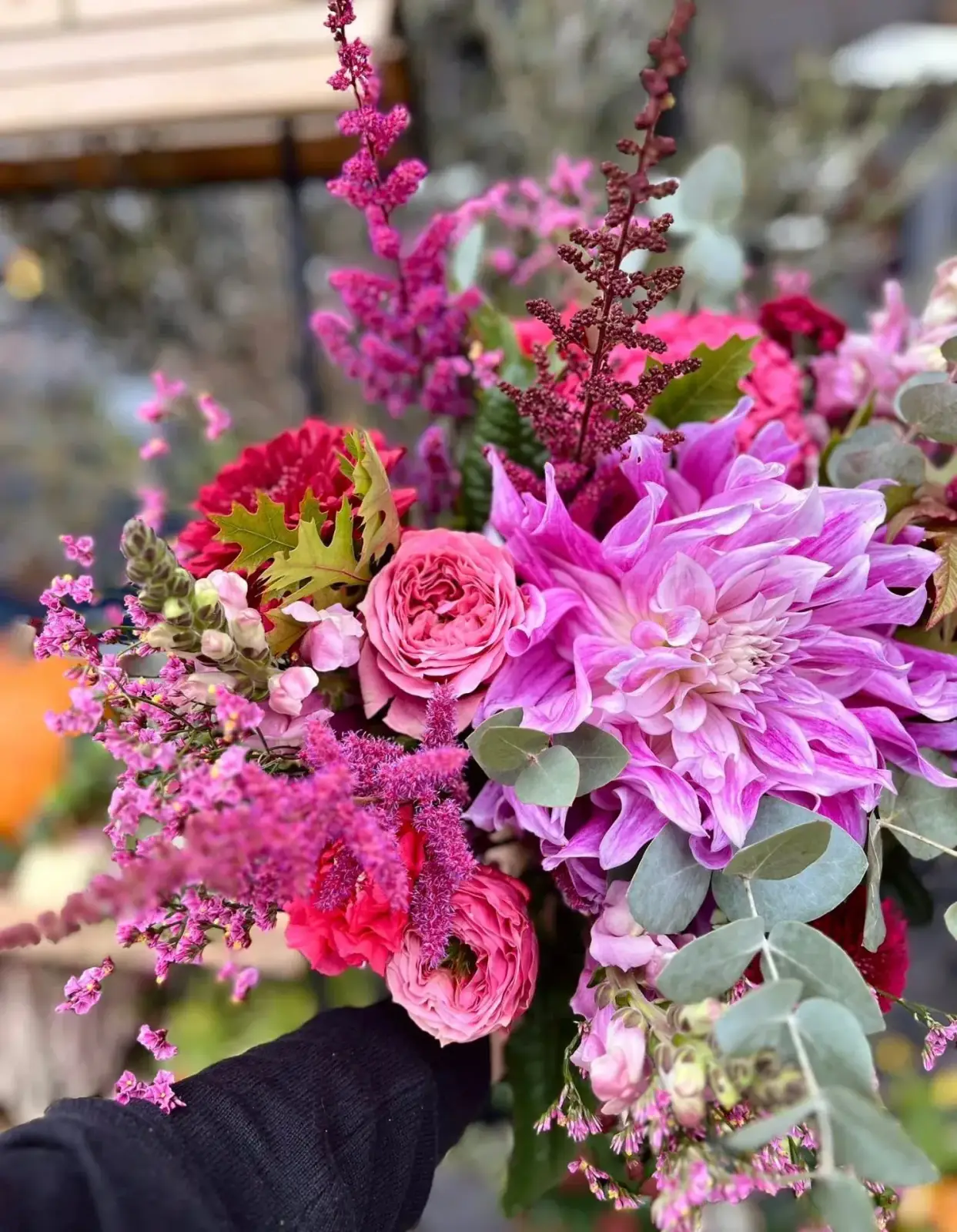 LA ROSE DES SABLES
The first surprise for many couples: "flowers" isn't a single item, it's about ten different ones. The wedding bouquet and the groom's boutonnière, yes. But also bouquets for bridesmaids or witnesses, flowers for hair, table centrepieces, ceremony decoration (arch, aisle, chairs), venue arrangements (entrance, bar, cake table), sometimes petals for the exit.
What we often see in Wallonia: a couple booking "just the bouquet" for 90 euros, only to discover three weeks before the wedding that the reception venue is empty. A large, neutral hall without flowers feels cold. So they panic and call the florist during peak season. Bad idea, bad price.
Ask the question at the first meeting: "bouquet only" service, "essentials" (bride, groom, a few tables) or "full decoration" including the venue and ceremony? Belgian florists who specialise in events, like Saliha from La rose des sables near Charleroi, offer support from bouquet design to full venue styling. This is the scope you need to clarify before comparing two quotes, otherwise you’ll be comparing unrelated things.
The wedding bouquet and the trap of out-of-season flowers
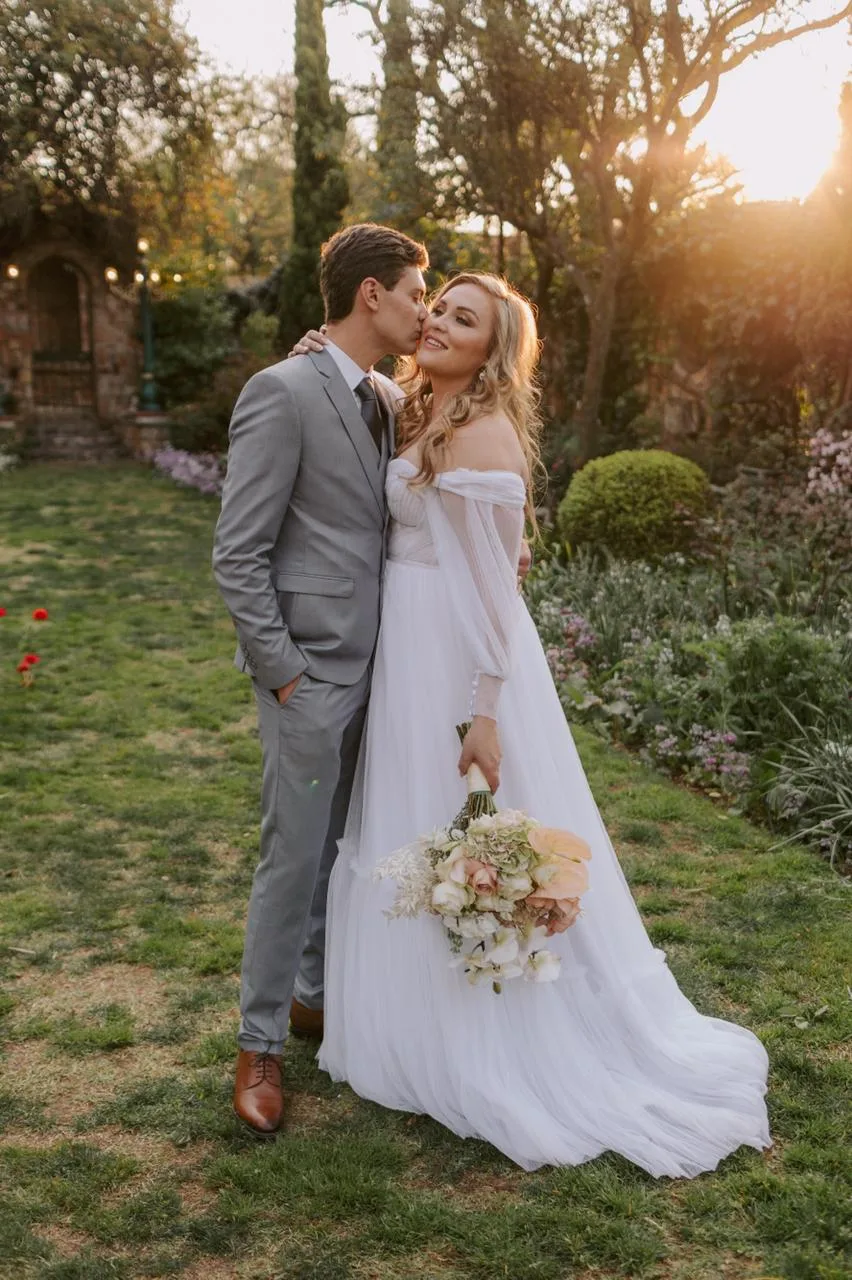 EQUILIBRIUM FLOWER STUDIO
In terms of shapes, you have a choice: round and compact, cascading, rustic and slightly dishevelled, long-stemmed to carry in the crook of your arm, or very graphic monochrome. None is better than another. The only rule that truly holds, in my opinion: the bouquet should complement the dress. If your dress is already very elaborate, with lace, ruffles, or a plunging back, a simple bouquet enhances it. A lavish cascade with a busy dress creates a battle, and no one wins.
The real trap, however, lies elsewhere. You stumble upon a photo of a peony bouquet on Pinterest, send it to your florist, and they inform you that for your September date, it would be imported, exorbitantly priced, and not guaranteed. Because peonies in Belgium bloom in May and early June. After that, they're gone. A good florist will tell you this frankly and suggest an alternative that achieves the same effect: ball dahlias, garden roses, or ranunculi, depending on the period.
At Equilibrium Flower Studio in Brussels, the work starts precisely from a mood board and a personalised proposal, designed around the venue, the season and the budget. This is exactly the conversation to have: not "which flowers do I want?", but "what atmosphere, what palette, what season?". The florist then chooses the varieties to achieve this intention.
Seasonal Flowers in Belgium: The Calendar

Here's the short version of the Belgian calendar, the one that avoids 90% of disappointments. In spring (March to May): ranunculus, anemones, tulips, lilacs, daffodils, lily of the valley, and the first peonies right at the end of the period. In summer (June to August), the peak of weddings here: peonies in early June, dahlias, garden roses, sweet peas, cosmos, hydrangeas, zinnias, sunflowers. This is the richest season, and that's a good thing, because it's also when most couples get married.
In autumn (September to November), don't bury your hopes: still dahlias, chrysanthemums (yes, they're making a comeback in wedding decor, far from the All Saints' Day image), asters, everlastings, grasses, copper foliage, and berries. A magnificent warm palette. In winter (December to February), it's tighter: forced ranunculus and anemones under glass, hellebores, amaryllis, bare branches, eucalyptus, and especially dried flowers which really come into their own.
More weddings are celebrated in summer in Belgium in recent years, according to Statbel records. If your date falls in June, July, or August, all the better for floral choice. If it falls out of season, don't fight the calendar: ask your florist what's beautiful at that time, and build around it. You'll save money and have flowers in perfect condition rather than imported ones tired from the journey.
Slow flowers and local flowers: the 2026 trend
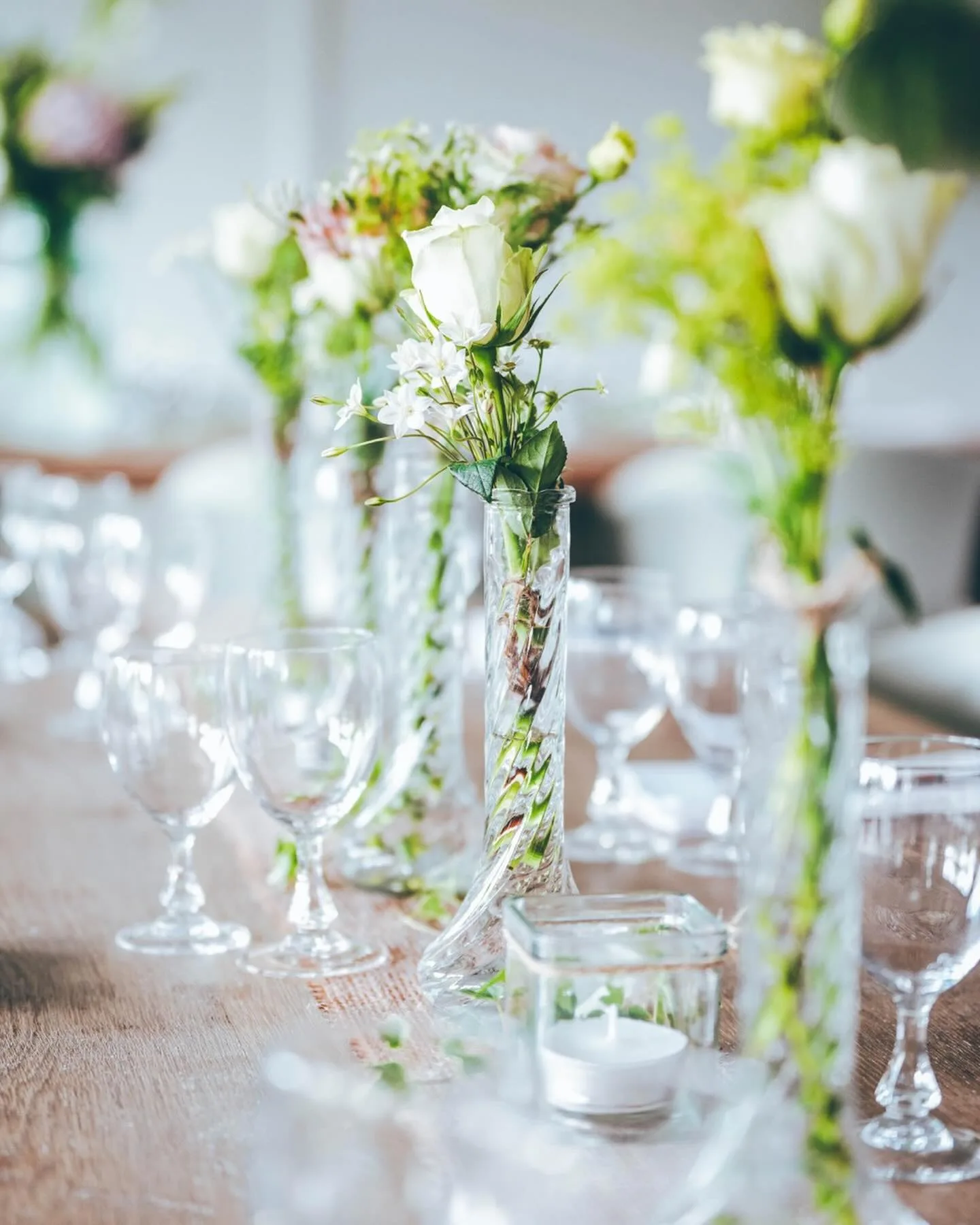 LA RÉCRÉ DES FLEURS
The slow flowers movement isn't a marketing gimmick. It's a real network of small Belgian producers, notably united via Belgium Slow Flowers, who grow seasonal field flowers, without bringing them in from Dutch auctions or further afield. The benefit for a wedding is twofold: a reduced transport footprint, and flowers picked at maturity, often more fragrant than those that have spent three days in a cold room.
The downside, let's be honest, is that you have to let go of some control. You don't choose a precise variety six months in advance; you trust what will be beautiful on the day. For a couple with an ultra-precise and non-negotiable mood board, this can be an issue. For a couple who wants an atmosphere rather than a catalogue, it's perfect.
Beware of greenwashing, though. A florist who buys imported roses from the auction and sticks a "local" label on them does exist. Ask directly: where do the flowers come from, which producers? Dried flowers are another growing trend: durable, insensitive to the season, and reusable after the wedding. La récré des fleurs, in Gembloux, has made it a speciality, with a universe focused on the seasons and plant-based candles. For a winter wedding or a tight budget, it's a serious avenue to explore.
Venue decor: centerpieces, arch, ceremony
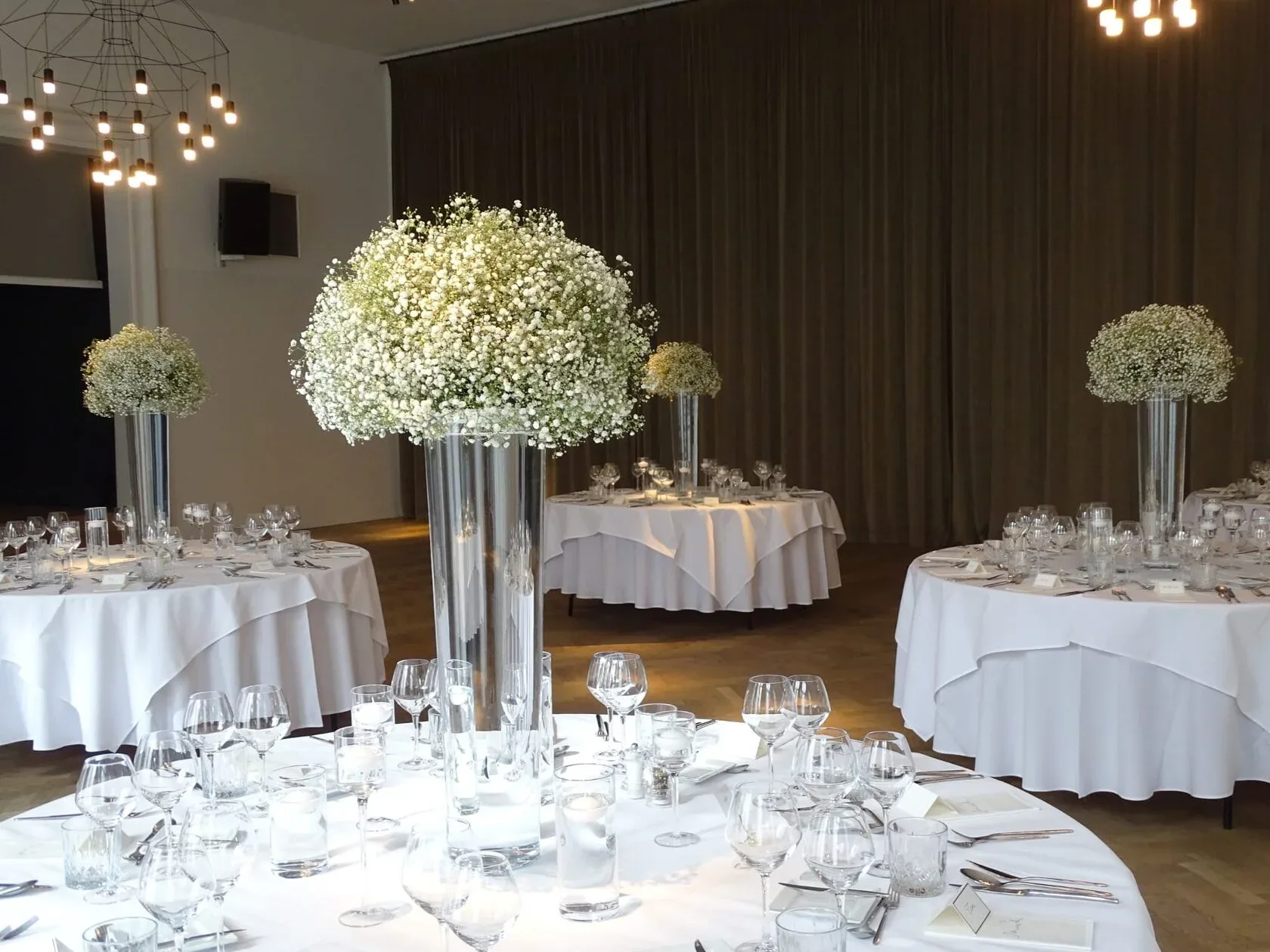 EQUILIBRIUM FLOWER STUDIO
The centerpieces. The real decision isn't "which flowers" but "what height". Tall and airy on a stand creates a spectacular ambiance, but it can obstruct the view between guests if not properly calibrated. Low and long encourages conversation. Many couples mix: some tall tables for volume, the rest low. The number depends on your seating plan, so coordinate the two rather than separately.
Regarding the ceremony. A floral arch, especially an asymmetrical one, remains the big demand for 2026, and we'll discuss it again in our tour of decor trends. If you're having an outdoor humanist ceremony, the arch structures the space and marks the focal point for photos. A common-sense tip: plan to move it afterwards to the reception venue or bar to make the most of it.
One last very Belgian reflex: look at your wedding venue. A rustic barn or a characterful château requires little, their walls already do the work. A neutral community hall, however, demands many more flowers to make an impact. Your floral budget should follow the wedding venue, not the other way around.
The flower budget, item by item
Let's talk numbers, keeping in mind these are estimates (see the box above). A detailed wedding bouquet often costs around 60 to 180 euros, depending on volume and varieties. A boutonnière, between 8 and 15. A bridesmaid's bouquet, 25 to 45. A table centrepiece, from 30 for a simple one to 120 and more for a large, tall arrangement. For a ceremony arch, expect easily 250 to 700 euros, or even more if it's dense.
All in all, flowers often represent 8 to 12% of the total budget, to be put into perspective with other items in our regional budget guide. Honestly, this is the item where the effect-to-euro ratio is best when well-planned, and worst when improvised at the last minute.
Wedding florist Belgium: 2026 price ranges
Centralise your suppliers in one place
Browse the directory of Belgian florists active on WEWED, compare their styles, and keep your favourites close at hand while you build your wedding file.
Browse the florist directory →Questions to ask before signing
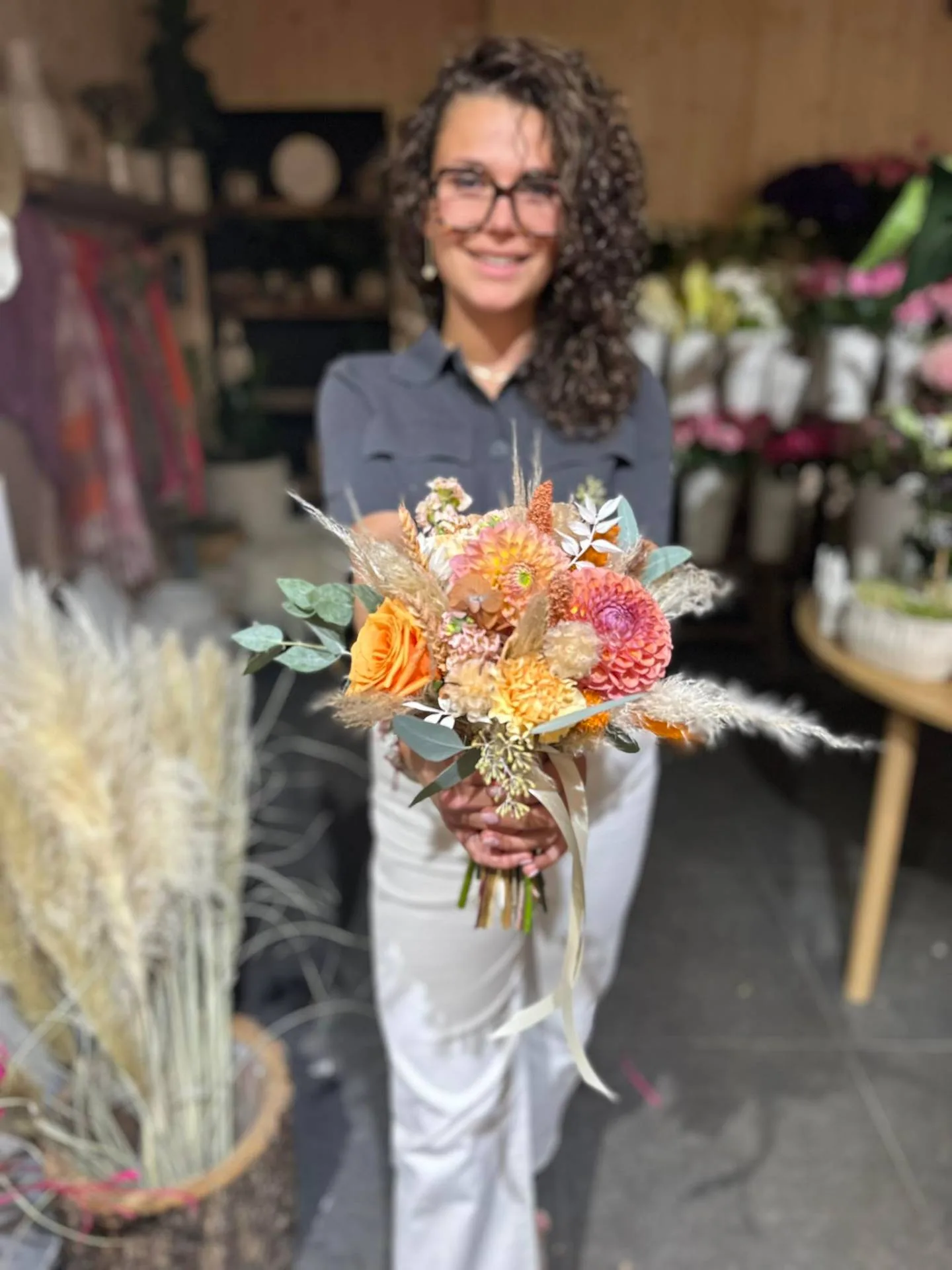 LA ROSE DES SABLES
You'll see the beauty of the arrangements in the portfolio. What the portfolio doesn't tell you is about logistics, and that's where unpleasant surprises can happen. Here's the checklist to go through at the first meeting.
Seven crucial questions
- Delivery and installation: included in the price? What time on the day?
- Return of containers: are the vases sold, rented, or collected afterwards? Who dismantles them?
- Plan B: if a variety is unavailable or damaged at the last minute, what's the fallback solution?
- Heat and outdoors: how do the flowers hold up on a summer day in a warm room or direct sunlight?
- Multiple weddings on the same weekend: how many simultaneous events, and who is responsible for yours?
- Mock-up or trial: is it possible to see a sample of the bouquet or a centrepiece before the day?
- Deposit and cancellation: amount of deposit, conditions in case of postponement or cancellation?
One detail that is always forgotten: communicate your day-of schedule hour by hour to your florist. They need to know when they can install, when you want the bouquet for photos, and when the reception venue becomes available for dismantling. A florist who asks these questions themselves has usually managed dozens of weddings. Good sign.
Expensive mistakes
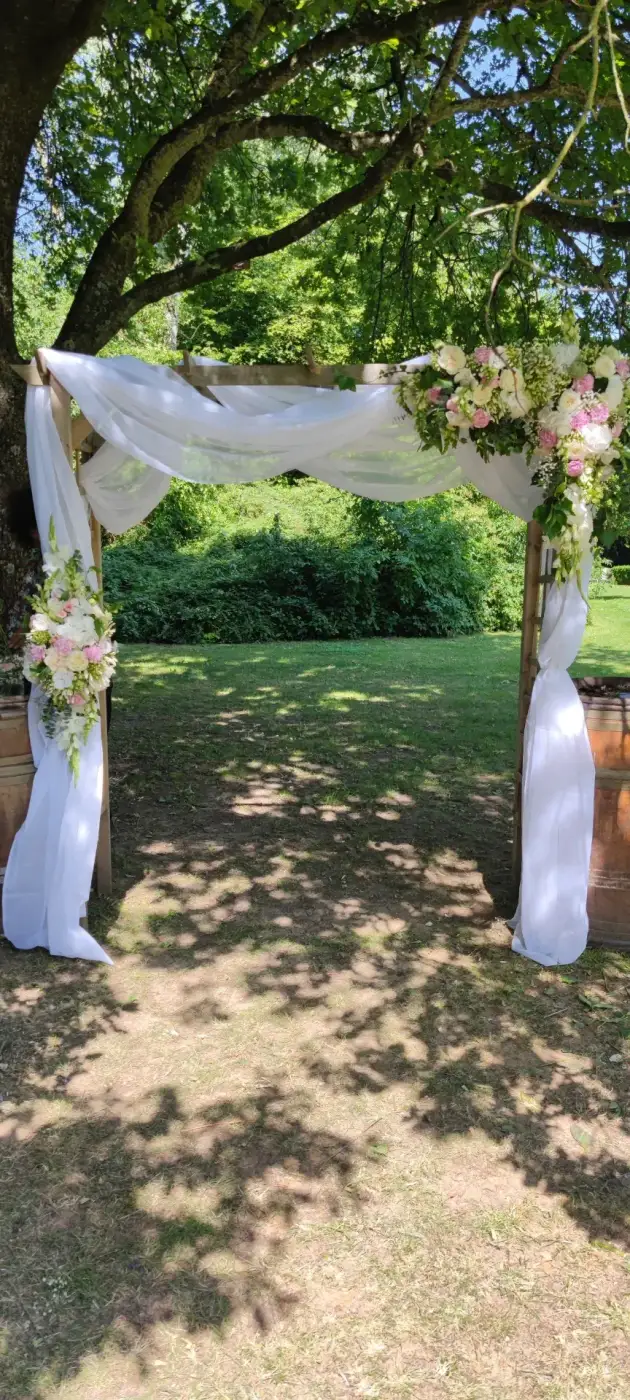 LA RÉCRÉ DES FLEURS
The most common: leaving it too late. A good wedding florist is often booked six to nine months in advance, and even earlier for a highly sought-after summer date. Schedule this appointment early in your planning timeline and in your organising checklist, otherwise you'll be left with whoever is available.
The other pitfalls are all similar: a mismatch between desire and reality. Wanting peonies in September. Demanding local flowers but refusing any compromise on the colour palette. Forgetting that a two-metre arch needs to be transported and assembled by someone. Underestimating the heat of a July reception venue on fragile flowers. And never returning rented vases, which turns a beautiful decoration into a surprise bill.
Nothing dramatic here, just issues to resolve beforehand, not during. A serious florist will raise most of these points themselves. If yours doesn't, ask the questions for them.
And you, are you leaning towards a simple bouquet or a generous cascade? And local seasonal flowers, or are you set on a specific variety no matter the cost? 👇
Frequently asked questions about wedding florists
When should you book your wedding florist in Belgium?
Ideally, plan to book six to nine months before the wedding, and even earlier if your date falls during peak summer season, when the best florists quickly get fully booked. Booking early also allows you time for a trial and to coordinate the colour palette with the dress and the venue.
What budget should you set aside for a wedding florist in Belgium?
Based on observations in early 2026, floral arrangements often represent 8 to 12% of the overall budget. A wedding bouquet typically costs between €60 and €180, a boutonnière €8 to €15, a table centrepiece €30 to €120 and upwards, and a ceremony arch €250 to €700 and beyond. Only a personalised quote is definitive.
Which flowers are in season for a summer wedding in Belgium?
Summer is the most abundant season: dahlias, garden roses, sweet peas, cosmos, hydrangeas, zinnias, and peonies at the very beginning of June. Choosing seasonal flowers means more freshness, better longevity, and a better price than imported varieties out of season.
Can you have peonies for a wedding in September?
Not locally: Belgian peonies are in season in May and early June. In September, they would be imported, expensive, and with no guarantee of quality. A good florist will suggest alternatives that offer the same round, generous effect, such as ball dahlias, certain garden roses, or ranunculus, depending on availability.
Do you need a florist or can you do your own flowers?
DIY floral arrangements are feasible for a small, intimate wedding and a few simple compositions. However, three things are almost always underestimated: the time required for preparation the day before, keeping the flowers cool, and the actual volume to produce. For complete decor, a professional is safer and, ultimately, often more cost-effective than failed attempts.
Fresh flowers or dried flowers for a wedding?
Dried flowers are durable, independent of the season, reusable after the wedding, and often more economical: a real option for winter or a tight budget. Fresh flowers offer the volume, fragrance, and brilliance for the big day. Many couples combine both, using dried flowers for lasting elements, and fresh flowers for the bouquet and tables.
This article is based on data from Statbel (48,589 weddings in Belgium in 2024, an increase, with a summer concentration) and the Belgium Slow Flowers network for local and seasonal flowers. The prices are estimated ranges observed in the Belgian market in early 2026, provided for informational purposes only: only your florist's quote is definitive. The signed visuals are from Belgian florists listed on WEWED (La rose des sables, Equilibrium Flower Studio, La récré des fleurs).