Wedding seating plan: the method that avoids family arguments

Article summary
Wedding seating plan: the 5-step method for seating 80 to 200 guests without family drama. Table shapes, special cases, digital tools, printer timing.
Summarise with AI
The wedding seating plan is the step that turns a weekend of celebrations into a cold sweat three weeks before the big day. You think you've sorted everything, and then Uncle Pierre refuses to sit next to his sister-in-law, a cousin emails to say she no longer eats "meat, gluten, or in front of her ex," and in the end, no one knows how many tables there are.
What we see in Wallonia and Brussels is that most couples underestimate the complexity of the exercise. They start too late, haphazardly, without a method. This article provides a proper 5-step procedure, the table shapes that work best for your number of guests, special cases to anticipate, and the printer's timeline to respect. Two well-spent afternoons, no more.
This article discusses the wedding seating plan for receptions of 50 to 200 guests. Below 30 people, the logic changes completely, and we talk about it in our dedicated guide to intimate wedding in Belgium.
Why the seating plan puts families to the test
An average wedding in Belgium has between 80 and 120 guests. With 48,589 weddings celebrated in 2024 according to Statbel, a record since the turn of the century, many seating plans are being put together these past months. And many underlying family tensions surface at this precise moment.
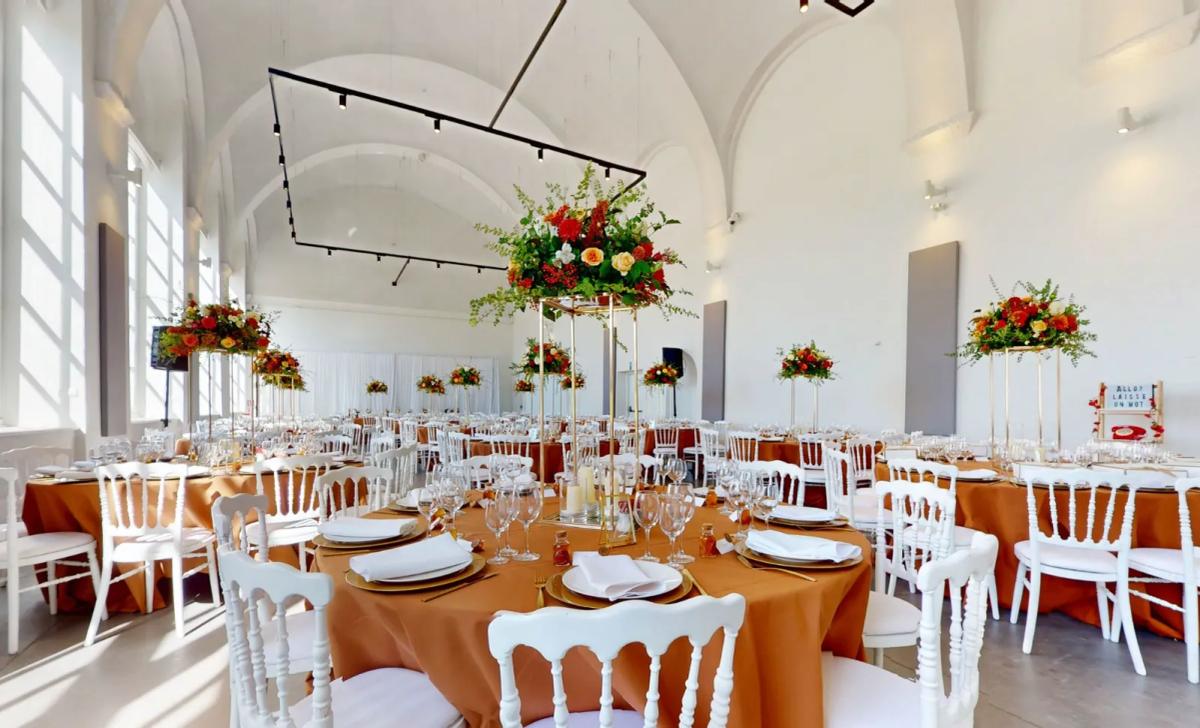 ORANGERIE DU CHÂTEAU DE SENEFFE
Why this precise moment? Because a seating plan is a public map of who matters to you. A distant cousin seated too close to the couple will wonder why her brother is further away. A divorced parent who finds themselves facing their ex on the same row will not forgive it. The table next door, theoretically unimportant, becomes a social ranking displayed to 100 people for 4 hours. To understand how this task fits into the overall preparation, take a look at our wedding timeline.
Frankly, we see two types of people. Those who start too early, three months beforehand, and redo the plan seven times, exhausting everyone. And those who start too late, two weeks beforehand, panicking, when the table paper printer refuses express jobs. The healthy timeframe: 6 to 4 weeks before the big day for the draft, then 8 to 10 days for the final version.
Free seating, semi-assigned, or named seating
Before even considering who sits where, you need to decide on the level of control. Three options exist, and most couples don't realise they can mix and match them.
The 3 levels of seating arrangements
Completely free seating works for a very intimate wedding, like a country meal among friends who all know each other. Beyond that, it's opening the door to groups gathering, isolated guests who can't find a seat, and the last empty tables where no one wants to sit.
Semi-assigned seating is the most common approach in Belgium today. You assign a table to each guest and let them choose their chair upon arrival. This eliminates 80% of conflicts and keeps things fluid. Strictly named seating becomes necessary as soon as there are underlying tensions (a parental divorce, a grandparent who needs to be next to a specific person). In my opinion, it's also mandatory for over 130 guests, simply because the noise and confusion upon arrival become unmanageable otherwise.

The 5-step method
Here is the method we recommend to couples who use WEWED. Two afternoons of work, no more, and the iterations are halved.
Map the clans (45 min)
- List your clans: groom's family 1, groom's family 2, childhood friends, colleagues, neighbours. Count each clan.
- Note hard constraints: "do not put X and Y at the same table", "Grandma Z must be close to the toilets".
- Identify pivots: sociable people who can absorb an isolated guest or connect two clans.
Define the golden rules (20 min)
- Generations mix: a little, not systematically. Mixing too much creates quiet tables.
- No 100% single tables. It's awkward, it shows, nobody likes it.
- Head table: either the bridal couple alone (or with witnesses), or bridal couple + parents. Not both.
- Children: dedicated table if more than 5, otherwise scattered with their parents.
Seat difficult guests first (1h)
- Start with high-stakes profiles: divorced parents, exes present, reduced mobility, VIPs (witnesses, grandparents).
- Once these 10-15 people are placed, the rest is built around them. If you save the difficult cases for last, your whole seating plan becomes unstable.
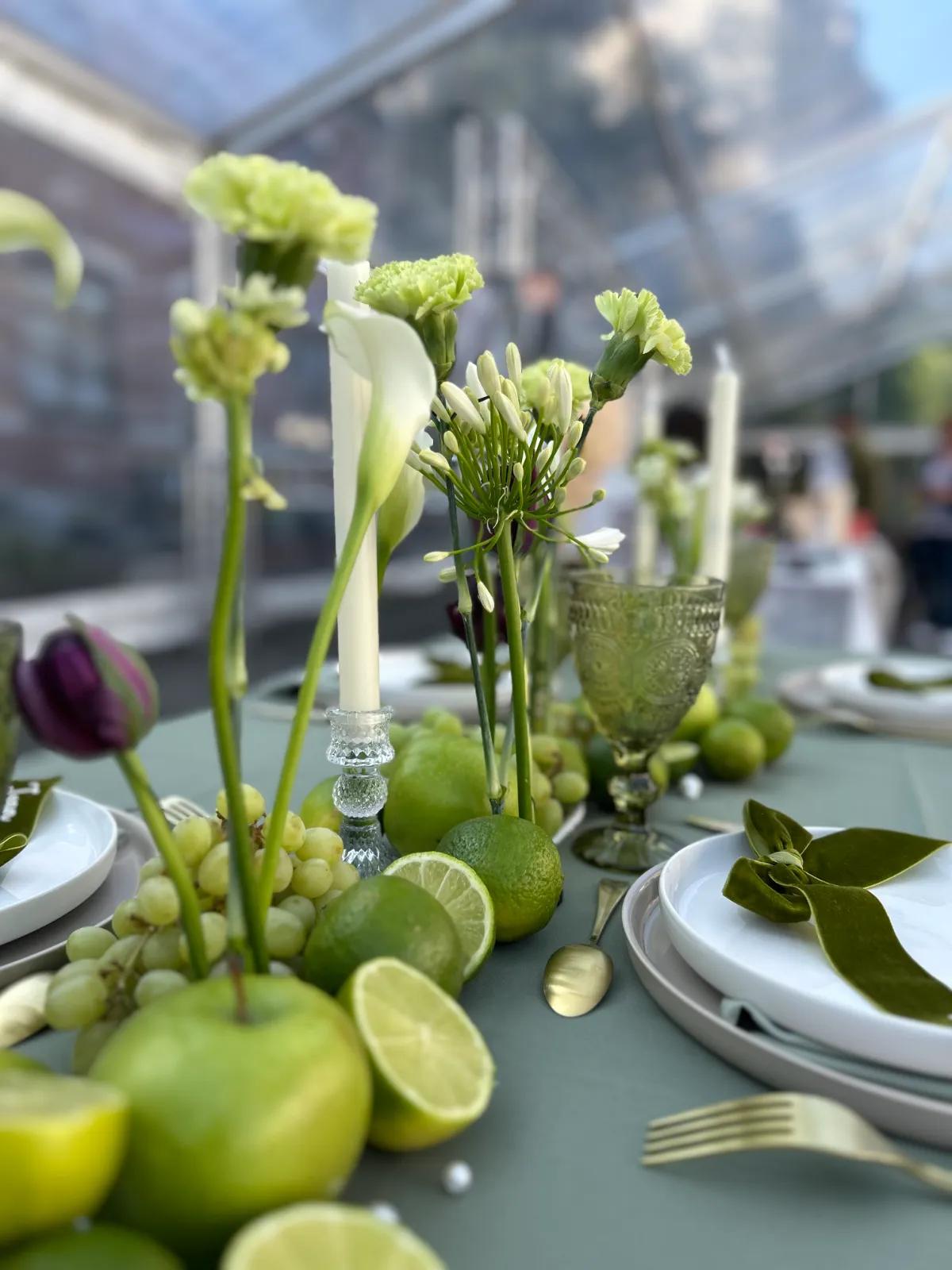 HAPP’INÈS SIGNATURE
Fill with aligned clans (1h30)
- One table = one dominant clan + 1 to 2 bridges from another clan. No more, otherwise the conversation breaks down.
- Place couples together. Never separate partners for the evening: an unwritten rule, and frustrating.
- Friends who don't know anyone: a friends-dominated table with a sociable pivot from your family.
Manage 'orphan' tables (45 min)
- Bad idea: the table you fill with people "who are left". Prefer to redistribute to avoid this 'dumping ground' table.
- If 6 solo people truly don't fit into any clan, create an "explorers" table with a strong pivot, and be transparent with them.
- Check the balance: 8 people per table of 8, not 7 + 9.
Table shapes: what really changes
How many people per table according to shape
Round tables. The most popular format in Belgium. Guests can all see each other, conversation flows easily, and 8 to 10 people can be seated comfortably. The downside: less photogenic in wide-angle, and some venues with low ceilings (barns, restored farms) don't cope well with a dozen round tables lined up.
Long rectangular tables. Very trendy for the last 5 years, especially in Walloon farms and marquees. Impressive visual effect. The drawback: the person opposite is further away than at a round table, and the person at the end won't hear anything from the other end. Recommended for 60-100 guests in two or three parallel rows. Beyond that, it becomes a military alignment.
U or T shape. Classic format for the head table only, or for very small weddings (max 30 guests). To be avoided for a reception of 80+ people: half the guests won't see the bridal couple.

Advice that few couples heed: visit the empty venue with a layout plan before finalising the number of tables. The capacities announced by venues ("up to 150 people") often include the dance floor, bar, and logistics area. You sometimes have 20-30 fewer usable seats. Our selection of wedding venues in Belgium details this point venue by venue.
Special cases: exes, divorced people, single people
Divorced or blended parents. The most sensitive case. Our recommendation: two distinct top tables, one for each biological parent, each surrounded by their loved ones. No mixed VIP table that forces contact. If a parent is in a relationship with a new partner, this person should be at the same table as them. Non-negotiable, and not to be placed opposite the ex.
Ex present among guests. This happens more often than one might think, especially in close-knit friendship circles. Simple rule: ex at a table far from the couple, with a current partner if they have one, not opposite someone who might rekindle things. Discreetly ask for their opinion through a close friend beforehand.
Children. If there are fewer than 5 children, scatter them with their parents. If there are more, create a kids table with an entertainer (this option is available from several Belgian suppliers, expect to pay €150-€350 for 4 hours). Parents get a break, children have fun, and the adult meal doesn't turn into a circus.
Single people. A classic mistake: a 100% single table in a "maybe they'll fall in love" style. This creates visible awkwardness and makes everyone uncomfortable. Prefer to spread them out, two by two at tables where they know at least one person.
Seating a grandparent with reduced mobility deserves a mention: table close to the toilets, clear access, not at the end of a noisy row. And ideally with someone who can help them stand up discreetly. Many couples forget this detail.
Digital tools and printer timing
Three families of tools exist for building the plan, and each has its own logic.
The paper + sticky note approach. Simple, tactile, very effective for initial drafts. A printed floor plan, labels with names, and you move the guests manually. Ideal for the first afternoon of work. The drawback: it doesn't synchronise with your guest list, every update is manual.
Generalist digital tools. Excel, Google Sheets, Notion. Good for counting, mediocre for visualisation. With 15 tables, you'll spend more time formatting cells than thinking about seating arrangements.
Specialised wedding tools. Including the WEWED couple area: the guest list, RSVP statuses, and future seating plan are linked, which avoids re-entry. You see in real time who is confirmed, who is pending, and how many seats you have left. A convenience that pays off in the last 4 weeks.
Regarding printer timing: if you plan a seating chart board, personalised place cards or arrival cards (escort cards), send your files to the stationer 3 weeks before the wedding. Belgian workshops that do calligraphy are working flat out during peak season (May to September), and a name file that changes twice systematically adds 4-7 days to the deadline. If you haven't yet finalised your wedding stationery, now is the time.
Centralise your guest list and seating plan
On WEWED, the guest list, RSVP statuses, and future seating plan are synchronised in one place. No more lost spreadsheets, no more duplicate names, no more "is he coming after all?".
Try the WEWED couple area →The 5 mistakes we see repeatedly
Five patterns reappear at almost every wedding. Avoid them, and you'll spare yourself a long conversation with an annoyed cousin the following Sunday.
The plan is set too early
- Creating a definitive plan 3 months in advance. You will have 3 to 8% last-minute cancellations, sometimes more.
- Good timing: draft at 6 weeks, stable version at 2 weeks, send to printer at 10 days.
"Democratic" seating
- Consulting each family about their seating. You will collect 50 contradictory requests and never finish.
- You decide, you take responsibility, and you explain afterwards if asked.
Forgetting special dietary requirements
- Severe allergies: to be reported to the caterer AND to be placed at the end of the table for service.
- Babies: table with a high chair available, near a quiet corner for bottles.
Not testing the plan aloud
- A week before, sit down and read the plan table by table aloud. You will immediately hear any anomalies.
- 20 minutes, and it saves awkward situations on the big day.
Underestimating the top table
- This is the one everyone looks at throughout the meal. A poorly thought-out composition means awkward silence in photos.
- Prefer to sit alone or only with close witnesses.
The seating plan isn't the most glamorous wedding topic. But it's the one that makes a reception flow smoothly or feel disjointed, joyful or merely polite. Two afternoons of work, a clear method, and you avoid half the tensions that end up in grimacing photos. If you calibrate your wedding budget in parallel, you'll also know how much to allocate for stationery and children's entertainment.
How are you getting on with your seating plan? Feeling calm, or in a panic? 👇
Frequently Asked Questions about the wedding seating plan
When should you finalise your wedding seating plan?
The final version should be ready 8 to 10 days before the wedding. The draft, however, should be put together as soon as you have 90% of the RSVPs, generally 4 to 6 weeks before. Any earlier, you will revise it too often. Any later, your stationer will not be able to keep up.
How to seat divorced parents without tension?
Create two distinct head tables, one for each parent, each surrounded by their immediate family and their current spouse or partner. Avoid a mixed table that forces contact. And place the two tables side by side but not face to face: this arrangement creates the least visual awkwardness.
Which table shape should you choose for 80 guests?
Two credible options: 10 round tables of 8, a classic formula that encourages conversation, or 4 long rectangular tables of 20 arranged in parallel, which is more visual but more restrictive in terms of sound. For over 100 guests, round tables become almost mandatory again.
How much space should be planned between tables?
A minimum of 1.50 m between two tables, for servers and guests to pass without jostling. Allow 2 m if you have service trolleys or an island layout. Many couples underestimate this point and end up with a reception venue that looks crowded.
Should there be a dedicated children's table?
From 5 children over 4 years old present, a dedicated table with an entertainer (150-350 € for 4 hours in Belgium) is well worth the investment. Parents can enjoy the meal, children do not get bored, and the general atmosphere remains adult without being glacial.
How to announce the seating plan to guests upon arrival?
Three formats work: a central board at the entrance listing guest, table number (legible, not very personal); named escort cards on a display (everyone finds their card, warm and elegant); or a combination of both. Avoid simply saying "sort yourselves out": it creates a bottleneck at the entrance.
This article is based on official Statbel marriage statistics in Belgium for 2024 (statbel.fgov.be) and practices observed among Belgian suppliers active on WEWED. The table capacities and minimum spacing mentioned are standards used by furniture rental companies and wedding venues in Belgium. The price ranges (children's entertainment, calligraphy) are estimates observed in Wallonia and Brussels for 2025-2026. The vendors illustrating this article (Orangerie du Château de Seneffe, Happ’Inès Signature, Maisons Fleuries) are approved WEWED suppliers.