Planning Your Wedding in 2026: 7 Things That Make Everything Easier Than in Our Parents' Day

Article summary
Online suppliers, checklists with reminders, digital RSVPs, real-time budgets: the 7 genuine advancements since the days of ring binders, and what hasn't changed.
Summarise with AI
Ask your parents how they found their wedding venue. The answer will be in three words: the Yellow Pages, word of mouth, or a colleague's brother-in-law. Quotes arrived by post, as did guests' replies, and everything else lived in a ring binder on the living room table for a year.
We love to romanticise that era. But let's be clear: organising your wedding in 2026 is objectively simpler in a number of specific ways. Not all, we'll come back to that. Belgians are also getting married later and later, according to Statbel, in their late thirties: established, working couples who organise their wedding in the evening after work. The tools have followed suit.
Here are the 7 things that have really changed the game, and what that actually means when you get started.
1. Finding your suppliers without leaving your sofa
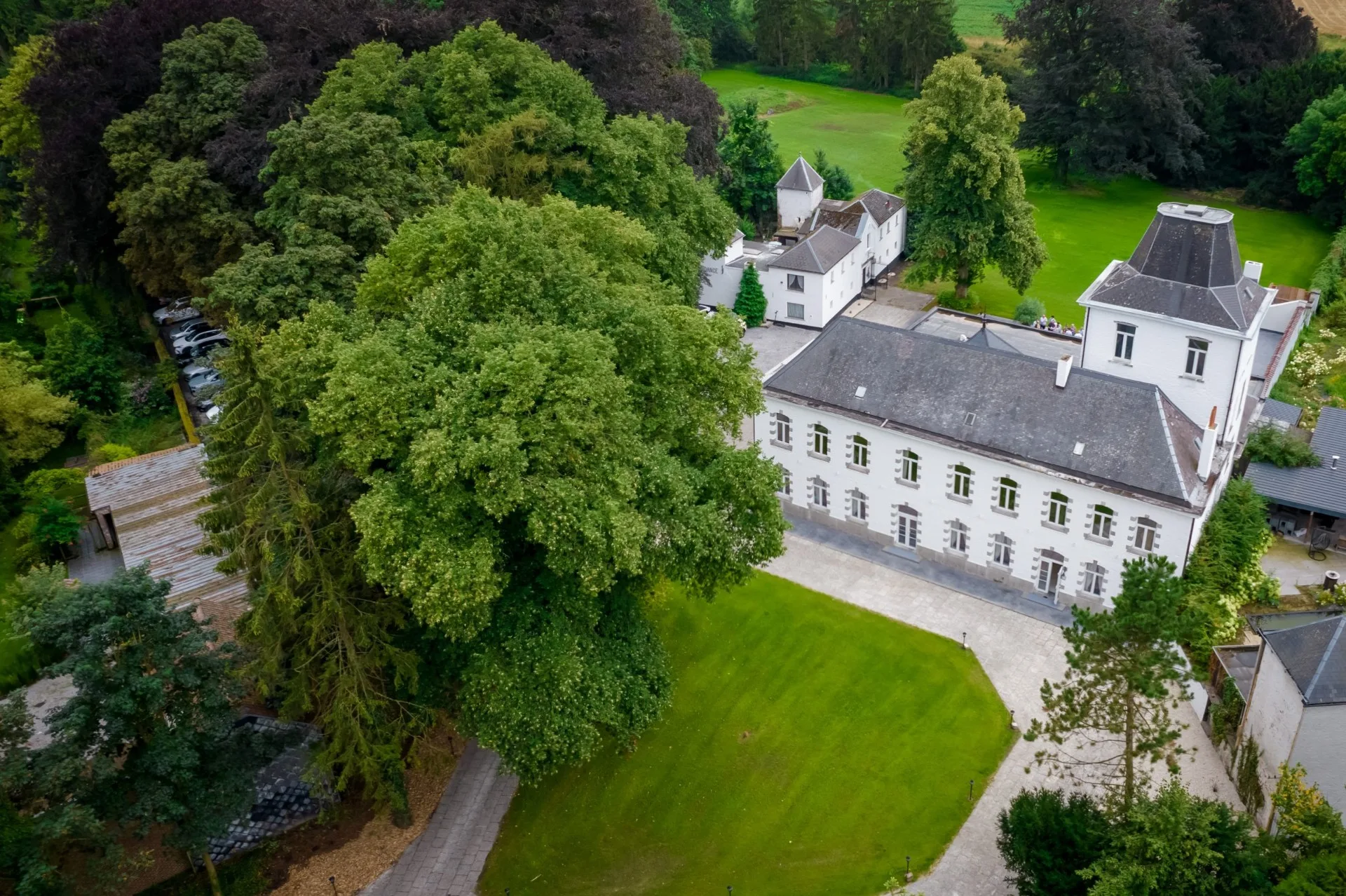 CHÂTEAU D’AVONDANCE
Your parents chose a photographer based on an album on a counter and a handshake. You, on the other hand, consult full portfolios, reviews, and galleries of real weddings, even before initial contact. A venue like Château d'Avondance in La Louvière can be explored online, including an aerial view of its park, before any visit.
The benefit is not just comfort. It's a real transfer of power to couples: you compare styles, service areas, and price ranges BEFORE committing to appointments. We've detailed the five methods that work in our guide to finding your wedding suppliers in Belgium. The downside: the visible offer has exploded, and sifting through it requires a minimum of method.
2. The checklist that thinks for you

The 1995 binder had one great quality: everything was in one place. And one fatal flaw: it never gave warnings. No one ever reminded you that the second caterer's deposit was due this month or that wedding rings needed to be ordered weeks in advance.
Current planning tools do exactly that. An interactive checklist that spans your retro-planning, tasks that can be moved like sticky notes, and automatic email reminders when a deadline approaches. The WEWED couple's area integrates these three elements, and frankly, it's the kind of tool we would have loved to slip into our mothers' binders.
The real benefit is mental. The burden of organisation doesn't disappear, but it's taken out of your head. You no longer wake up at 3 am wondering if the DJ has confirmed.
3. RSVPs without mail or phone reminders

In our parents' day, every wedding invitation came with a stamped reply card. Then came the real ordeal: telephoning the thirty people who hadn't returned the card. Whole evenings spent on the living room phone.
In 2026, the paper wedding invitation still has its place for sentimental value, but the logistics are online: a wedding page, an RSVP link, and a guest list that updates itself, including dietary requirements and children. Reminders are sent in two clicks, not two evenings. On WEWED, guest list management is integrated into the couple's area, which avoids the eleven-tab Excel file shared across three email boxes.
4. The Wedding Gift List Without a Designated Shop
Our parents' wedding gift list was a deposit at an appliance or tableware store, with guests having to visit during opening hours. The twelve-place porcelain dinner service fed a whole generation of cupboards.
The 2026 version: an online list, accessible from your wedding invitation or wedding page, where guests contribute to what really matters to you. One night of the honeymoon, a contribution towards the photographer, a cargo bike. We've compared the options in our guide to the wedding gift list in Belgium, and the conclusion is clear: targeted contributions have won. Your guests know what they're contributing to, you receive what you need, and no one has to park in front of a shop on a Saturday.
5. Photography and Videography Are Completely Different Now
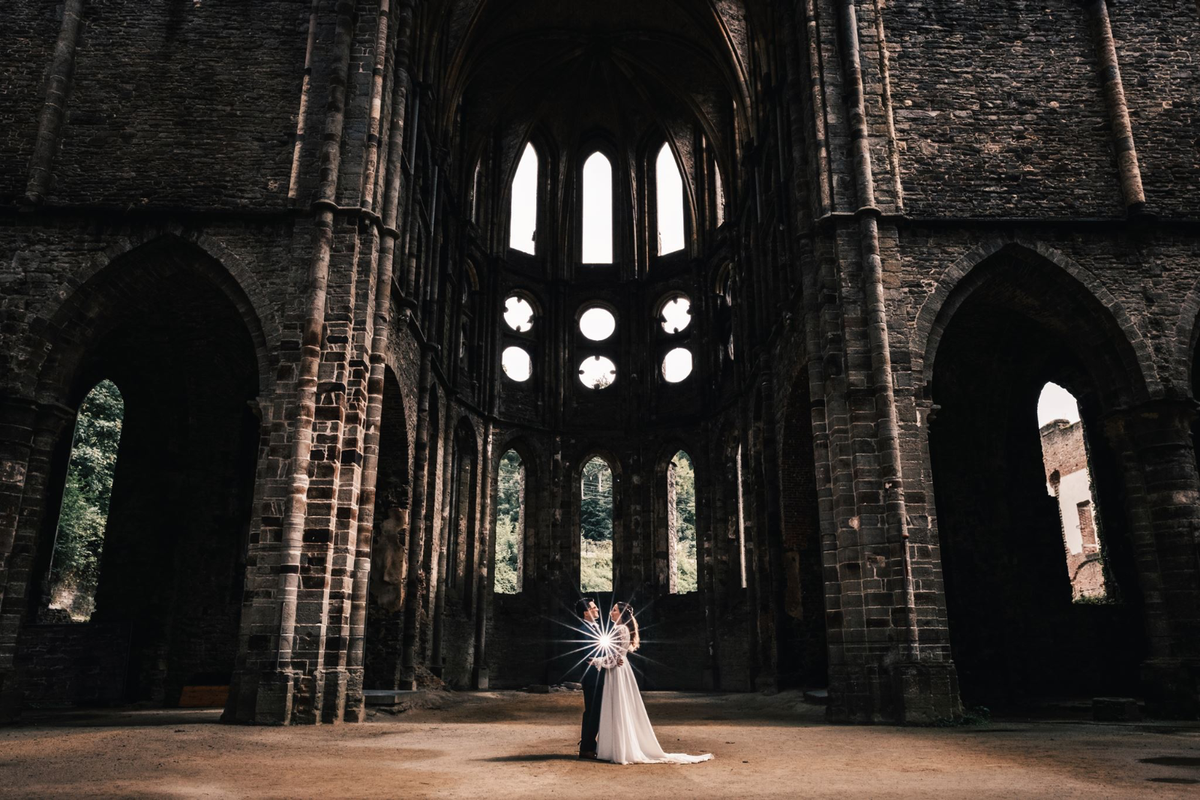 À TANTÔT! PRODUCTIONS
Your parents received an album of 40 photos, chosen by the photographer, delivered three months later. No chance to catch up: the film was used up, that was it. Video, when it existed, was a VHS filmed by an uncle with a shoulder-mounted camcorder.
Today, a complete report covers the entire day in both photos AND video, with online galleries to share, edited films, sometimes even a drone. Duos like Fred and Mic from À tantôt! Productions cover both media in a single team: one contact person, a coherent approach, and you relive the day instead of reconstructing it. The prices of Belgian photographers remain a significant budget item, but what you receive is simply incomparable.
6. The Budget Is Monitored in Real Time

The 1995 wedding budget lived in a kraft envelope: paper quotes, pencil additions, and discovering overspending... at the moment of payment. Today's couples manage a centralised budget: every item, every deposit paid, every remaining balance, continuously visible and shared between the couple.
It doesn't make the wedding cheaper, to be honest. But it eliminates the worst situation: discovering in September that the caterer's extras have eaten up the flower budget. Our parents' bad surprises were rarely about the amount, they were about a lack of visibility.
7. Administrative Formalities Are Prepared Online
Our parents queued at the local council counter for every document: birth certificate extract, household composition, residence certificate. Sometimes in several municipalities, sometimes requiring time off work.
Since the creation of the central database for civil status records, extracts of acts (birth, wedding) can be requested online via Just-on-web, the FPS Justice portal, and most major Belgian local councils offer online appointment booking for wedding declarations. The file remains a file, we won't lie to you, and we detail it item by item in our guide to documents for civil weddings. But the "running around to counters" part has largely diminished.
Organising Your Wedding: 1995 vs 2026
- Finding suppliers: the Yellow Pages then, online directories now.
- Task tracking: the paper binder has given way to the checklist with automatic reminders.
- Guest replies: the stamped reply card has become an online RSVP.
- Wedding gift list: from in-store deposit to online list with targeted contributions.
- Photography: from 40 photos chosen by the photographer to a complete gallery and film.
- Civil status records: from queuing at the counter to online applications via Just-on-web.
Your Parents' Binder, Only Better
Interactive checklist, automatic email reminders, centralised budget, guest list and wedding gift list: the WEWED couple's area gathers the complete organisation of your wedding in one place, for free.
Create your couple's area →What Has Not Changed (And Will Not Change)
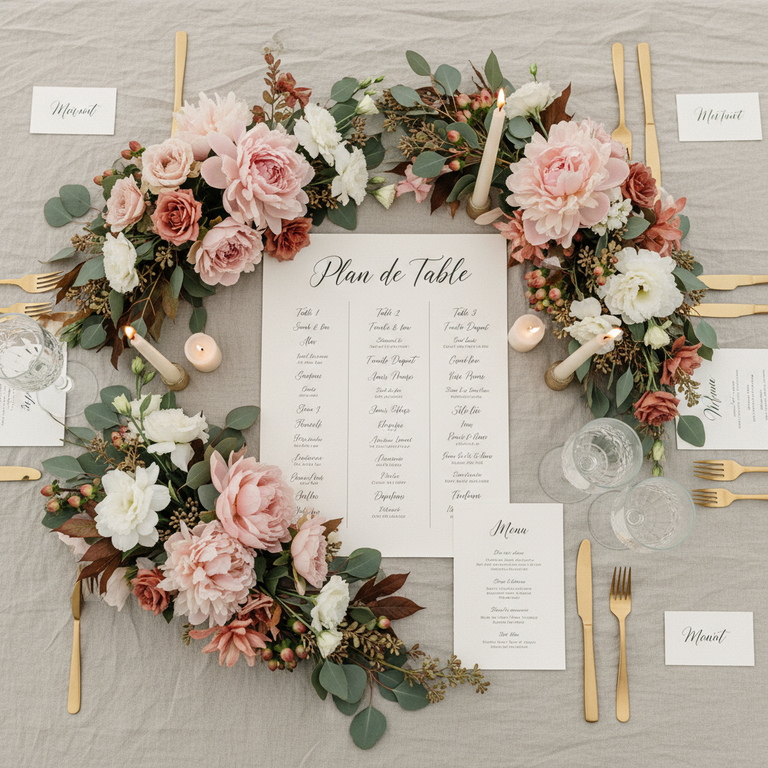
A little honesty to finish, because not everything is simpler than before. The best venues are still booked a year in advance, sometimes more. Delicate conversations with families don't have an app. The seating plan remains a diplomatic puzzle that technology eases without solving. And the Belgian wedding day weather mocks your tools just as it mocked your parents' ones.
There's even a new difficulty: too much choice. Our parents compared three caterers, you have fifty in front of you. It's a luxury, but a tiring luxury if you don't have a method. From our market observation, the couples who do best are not those who explore the most, they are those who decide quickly on the big items and save their energy for what distinguishes them.
In short: the tools have changed, the essence remains the same. Two people, a celebration, people you love. The rest is logistics, and logistics have never been better equipped.
And what did your parents tell you about organising THEIR wedding? Folder anecdotes and RSVP cards, we'll take 'em. 👇
Organising Your Wedding in 2026: Frequently Asked Questions
How long does it take to organise a wedding?
The Belgian standard is around 12 to 18 months, mainly due to the booking lead times for the most in-demand venues and suppliers. A wedding can be organised in 6 months, but with fewer choices for the main items.
What tools should I use to organise my wedding?
The basic trio: a checklist with reminders, a centralised budget shared between both partners, and online guest management for RSVPs. The WEWED couple's space brings together all three, with the wedding gift list and wedding day schedule included.
Can you still organise a wedding "the old-fashioned way", without online tools?
Of course. A folder and an address book still work. Digital mostly saves time on coordination: reminders, deadlines, updates. Nothing prevents mixing the two.
Can civil wedding procedures be done entirely online?
Not entirely. Extracts of acts can be requested online via Just-on-web and many local councils offer online appointment booking, but the wedding declaration itself must be physically signed at the council office.
At what age do people get married in Belgium today?
Belgians are getting married later and later according to Statbel: on average over 30 for a first wedding, compared to around twenty for the previous generation. More established couples, who often organise their wedding alongside a busy professional life.
What remains the most difficult part of organising a wedding?
Booking lead times for venues, family arbitration, and too much choice. Tools reduce the logistical burden, not the emotional burden: deciding quickly on the main items remains the best advice.
This article is based on Statbel data concerning the evolution of marriage age and the number of weddings in Belgium, on the FPS Justice for requesting online civil status acts via Just-on-web, and on belgium.be for civil wedding formalities. Generational comparisons are based on market observations and testimonials collected from couples and suppliers we work with. Sources: statbel.fgov.be, justice.belgium.be, belgium.be. The suppliers mentioned are listed in the WEWED directory.