Wedding Dresses in Belgium: Prices, Boutiques, Bespoke or Second-Hand

Article summary
Real prices, lead times, Belgian boutiques and second-hand bargains: the complete guide to choosing your wedding dress in Belgium without overspending.
Summarise with AI
There comes a moment in wedding planning when everyone has an opinion: your mum, your witnesses, your friend who got married last year. And then there's you, in front of a mirror, trying to understand why a £900 dress and a £3,000 dress look so similar on the hanger. The truth is, the wedding dress market in Belgium is less straightforward than it appears, and most couples discover the real costs (alterations included) far too late.
This article aims to clarify things. No Pinterest inspiration, no top 20 laces: just the four real ways to get dressed in Belgium, what they really cost, when to order, and the pitfalls that can blow your budget. Featuring Belgian boutiques we've seen working diligently, from Hainaut to Walloon Brabant.
A note from the outset: no prices mentioned here are official rates. These are estimates observed in the Belgian market for 2025-2026. Your quote will depend on the designer, the material, your body shape, and the number of alterations. Treat these figures as a guide, not a fixed price list.
The 48,589 weddings celebrated in Belgium in 2024 (Statbel figure) create huge demand for boutiques in spring and summer. Specifically: if you're aiming for a Saturday in June, the best fitting slots are booked months in advance. Timing is as important as budget.
What a wedding dress really costs in Belgium

When it comes to wedding dresses in Belgium, there isn't one price but four, depending on the chosen route. Let's outline the price ranges, route by route, as we're seeing them this year. Second-hand and outlet options start around €150 to €700. New ready-to-wear, such as from specialist chains, typically ranges between €700 and €1,300, with the dress taken home on the same day. Multi-brand boutiques, where most Belgian brides end up buying, usually fall between €1,200 and €2,800 excluding alterations. Bespoke designer dresses climb from €2,500 to €4,500, sometimes much higher.
What these figures hide: alterations, which we'll discuss below, almost always add an extra €150 to €400. And accessories (veil, petticoat, belt, shoes) can increase the total by several hundred euros, often without being budgeted for. Honestly, that's where the overspending begins.
To put the dress in context of your overall expenses, our analysis of wedding budgets by region provides realistic percentages. The bride's outfit generally accounts for around 7 to 10% of the total, including alterations and accessories.
Boutique, bespoke, ready-to-wear, second-hand: the four ways

Four paths lead to the altar, and they cater to different brides. The multi-brand boutique offers a guided experience: you try on models from several designers, a consultant advises you, and you order your size. Bespoke starts from a sketch or a model adapted to your body; it offers total freedom but with corresponding lead times and prices. New ready-to-wear is all about speed: you try it on, you take it, you leave with it. Finally, second-hand is the option that makes high-end designer dresses accessible for a fraction of the price.
The classic pitfall is believing that you should choose between these options based solely on budget. This is incorrect. A hurried bride with a large budget might find ready-to-wear more suitable than bespoke. A bride on a tight budget but organised well in advance might find her happiness in a multi-brand boutique thanks to discounted display models. The right criteria are the triptych of time, body shape, and desire for a unique piece.
The four ways at a glance
The Boutique: What Really Happens During the Fitting
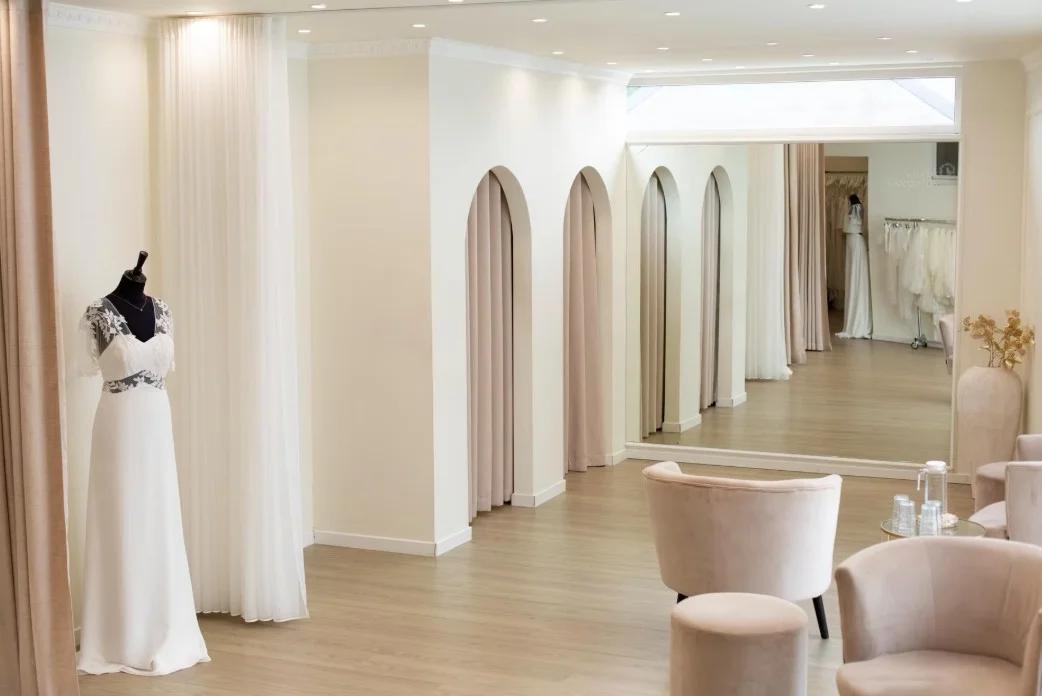 INOUI
INOUI
The first boutique appointment surprises many brides. You don't wander alone between the racks like in a clothing store. A consultant welcomes you, understands your vision, selects four or five styles and helps you try them on, because a wedding dress is rarely put on alone. Allow one to one and a half hours per appointment, by reservation.
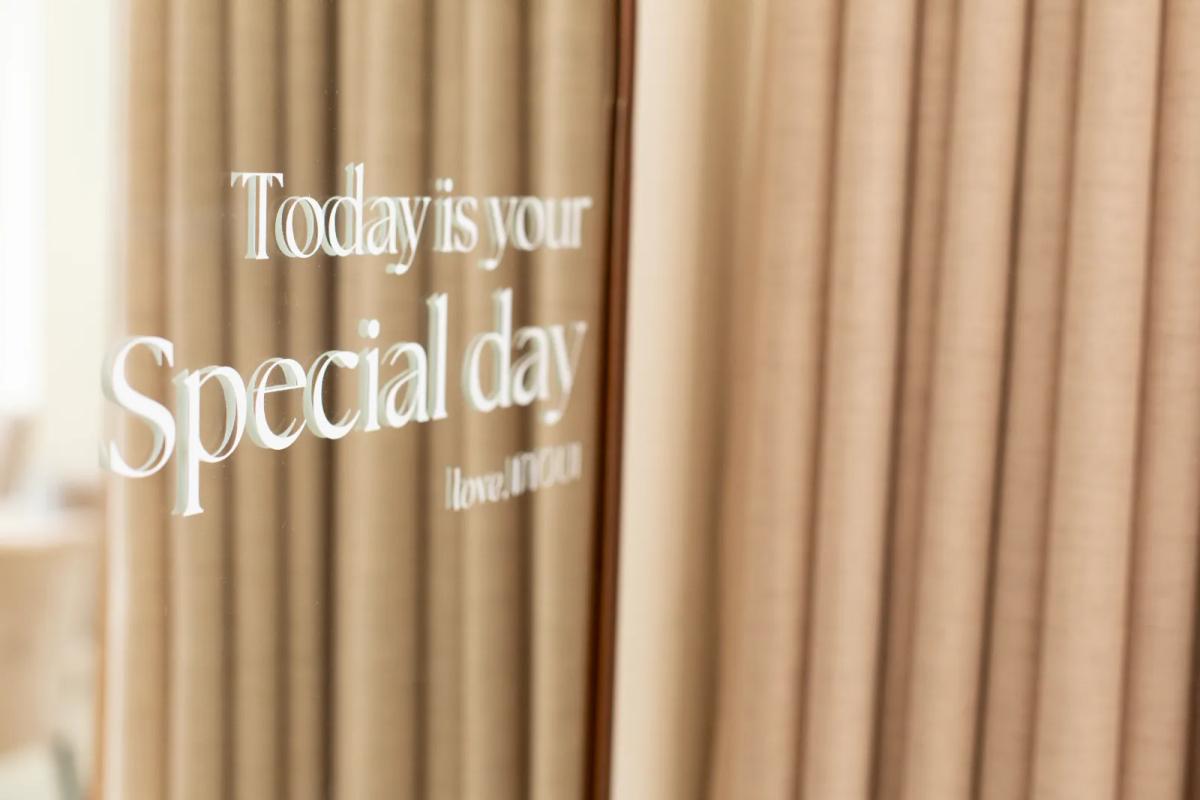
Belgian family businesses understand this well: the experience is part of the product. At Inoui, in Braine-l’Alleud, this idea of a cocoon where the future bride feels heard rather than sold to has been cultivated since 2008. This is exactly the kind of welcome that turns a stressful fitting into a good memory, and helps in making a decision without pressure. My advice: limit the first appointment to a maximum of two people from your entourage. Beyond that, opinions will contradict each other and you will leave more confused than before.
To find a reputable boutique near you, the directory of Belgian suppliers on WEWED lists addresses by region, with no advertising or paid rankings.
Multi-brand or Designer: The Real Prices
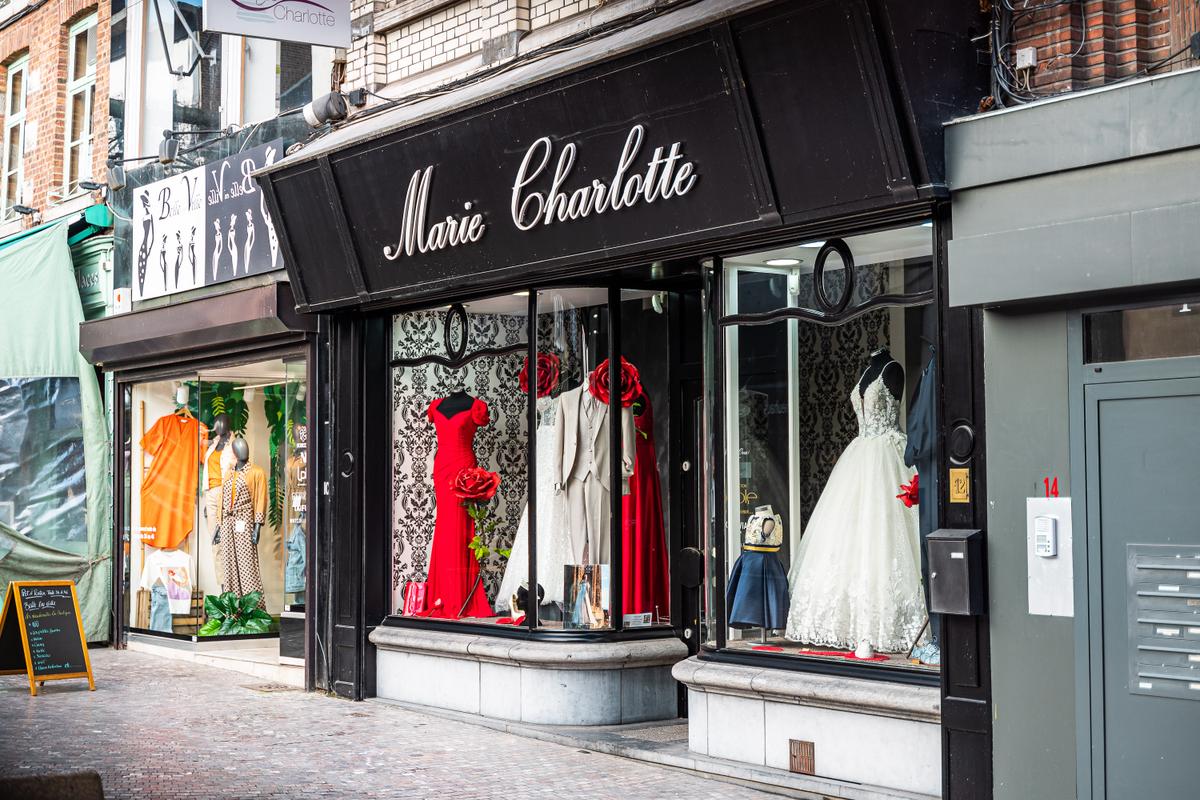 MARIE CHARLOTTE
The multi-brand boutique is the heart of the market. You will find models from several houses, from the most affordable to the most sophisticated, and then order your size from the manufacturer. The wide range, €1,200 to €2,800, is explained by the material (a simple crepe is nothing like hand-embroidered lace) and by the internal structure work, which is invisible but crucial for the fit.
Stores like Marie Charlotte in Charleroi play on this wide range: a broad choice for all budgets, plus the possibility of bespoke creations for those who want a unique piece. It's a good idea to start with a multi-brand even if you are leaning towards bespoke: it teaches you what suits you, and what you dislike once the dress is on. Many brides radically change their minds between the saved photo and the mirror.
A boutique that refuses to give you a price range until you have “fallen in love” is a boutique to avoid. Falling in love with a dress that is out of budget spoils the rest of the planning. Announce your ceiling from the first call, a good consultant will work with it.
Bespoke: For Whom It's Worth It
 MARIE CHARLOTTE
Bespoke is a dream, but it's not for everyone. It makes perfect sense in three cases. Especially for body shapes that ready-to-wear dresses don't flatter well: a dress designed for your body radically changes the outcome. When you have a very precise idea that no existing model conveys. And if you are set on a fabric or a detail that can't be found elsewhere, for example, lace inherited from your grandmother reincorporated into the design.
Aside from these cases, let's be clear: bespoke costs more and requires more appointments (sketches, toile, two to three technical fittings) for a result that often could have been achieved with good alterations on a boutique dress. Expect €2,500 to €4,500, sometimes more, and a minimum lead time of four to six months. If your planning is already tight, this is rarely the preferred option.
Ready-to-Wear and Outlet: The Express Lane
Chains specialising in ready-to-wear dresses have changed the game for brides in a hurry or on a strict budget. The principle: a large stock in store, you try it on, you leave with the dress the same day, for around €700 to €1,300. No manufacturing delays, no anxiety about late delivery. For a wedding organised in a few months, or a civil wedding, it's a remarkably efficient option.
The downside: the choice of in-stock sizes is limited, and the material is often inferior to a designer dress. But honestly, in photos, the difference is much less noticeable than one might think, especially once the dress is altered to your size. It's also the ideal option for a second, lighter evening outfit, to dance without dragging three metres of train. Many Belgian brides adopt this duo of a ceremony dress plus a party dress.
Second-hand: the smartest option
This is the least discussed option, and the one that deserves the most attention. A dress is only worn for one day, the second-hand market is full of almost new models from major brands, at 30 or 50% of their original price. In Belgium, specialist shops have developed around this niche, such as My D Day Dress in Waterloo or La Mariée à Bicyclette in Perwez, in Walloon Brabant, which offer consignment and designer outlet items.
Good practices are few. Always try it on before buying, a second-hand dress cannot be returned. Check the condition of fragile areas: zip, hem, underarms, train bottom. And allow for a alterations budget, as a second-hand dress is rarely your exact size. Ultimately, you wear a £2,500 dress for £800, alterations included. For a bride comfortable with the idea, this is probably the best value for money on the market. Second-hand also fits very well into a more understated wedding approach, like the male counterpart detailed in our groom's suit guide.
Body shape, plus sizes and alterations
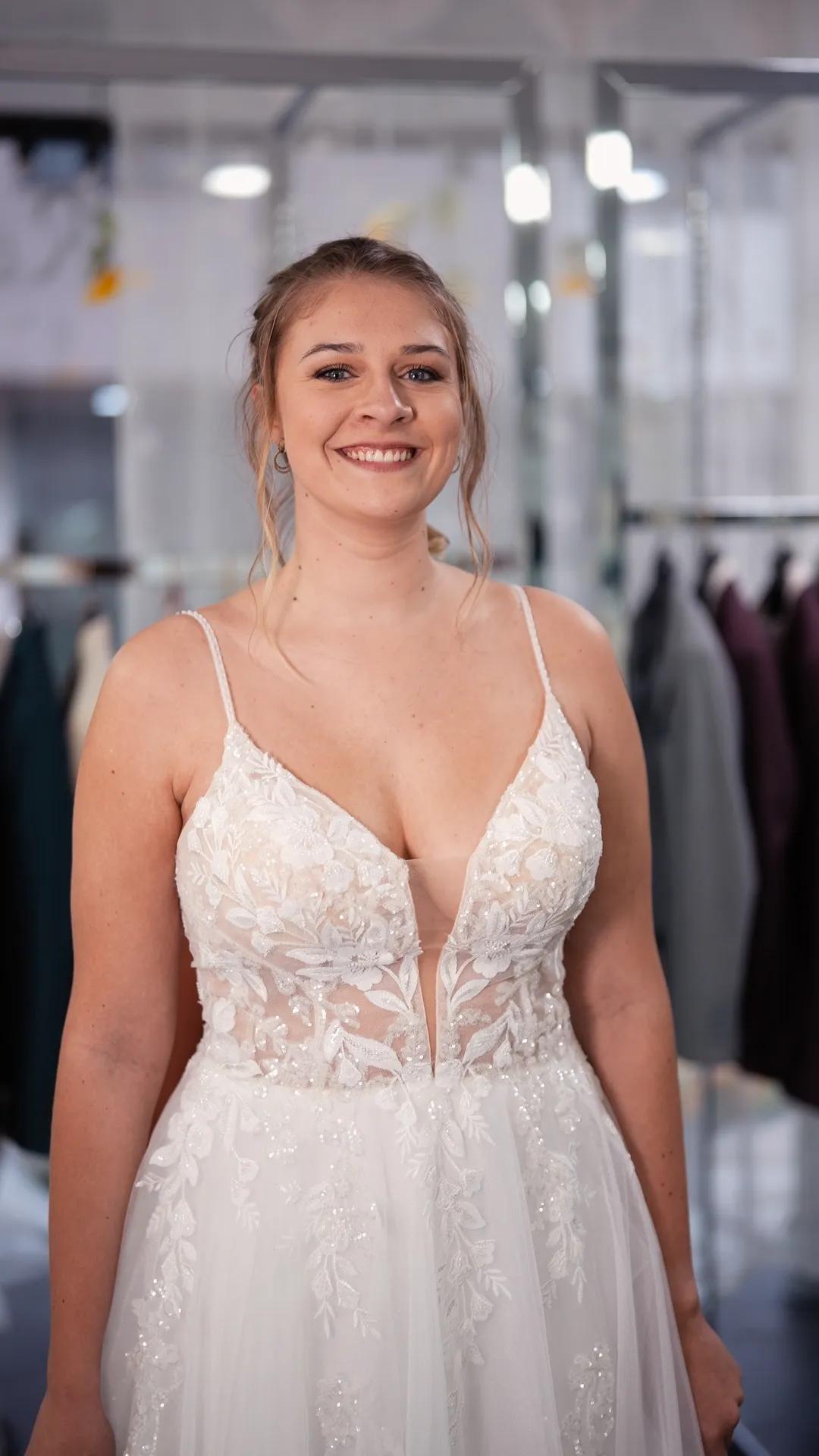 REFLET AMBRÉ
Let's talk about the item that no one budgets for and that catches everyone out: alterations. Almost no dress fits perfectly without adjustment. Hem at the right length according to your shoes, waist darts, straps, sometimes adding an inner bustier, allow £150 to £400, and two to three fitting appointments spread over the preceding weeks. The last fitting should ideally be done ten days before the wedding, to match your figure on the big day.
Shops that have their own workshop make your life a lot easier. This point is more important than it seems: a good in-house seamstress means zero coordination between suppliers and zero risk of an external alterations specialist damaging a fabric they are not familiar with. Regarding plus sizes, demand a shop that actually has stock to try on in your size. Blindly ordering a size you have never tried on is the best way to cry three weeks before the wedding.
Keep your fittings and your suppliers in the same place
Dress, alterations, accessories: between appointments, deposits and deadlines, things quickly get out of hand. WEWED's interactive checklist and centralised budget in the couple's area help you avoid forgetting a fitting date or a payment.
Organise my preparations →When to order and how to make your appointment a success
 INOUI
INOUI
The timeline is what distinguishes a calm search from a race against time. For a boutique or designer dress, manufacturing times are around four to six months, plus alterations. The rule of thumb: start fittings ten to twelve months before the wedding, order eight to ten months before. For ready-to-wear or second-hand, you can shorten this, but don't go below two to three months if you want some leeway for alterations.
What's on the rise this year
- Modular outfits: removable top and skirt, or dress then jumpsuit, to transition from ceremony to dance floor.
- Sculptural and minimalist cuts: less Cinderella volume, more clean lines and structured fabrics.
- 3D flowers and embroidered reliefs on tulle, replacing classic all-over lace.
- Removable sleeves and accessories, for a single dress that tells two stories during the day.
To make your appointments a success: come with light-coloured and seamless underwear, shoes at the expected height, and hair roughly as it will be on the big day. Avoid visiting too many shops on the same day, three maximum, otherwise everything gets mixed up. And think about overall coherence: the dress must be in harmony with the venue, the lighting and the style of the pictures. If you are still booking your date or venue, our selection of wedding venues in Belgium helps set the scene before the outfit, and the choice of photographer deserves the same anticipation as the dress. On the big day, include dressing and final alteration times in your big day schedule, this is the detail often forgotten that can delay the whole morning.
Ultimately, choosing your wedding dress in Belgium comes down to a question of honesty with yourself: how much time do you have, and what do you really expect from a dress worn for one day? Answer that before opening any door, and the rest will follow naturally.
Are you leaning towards a boutique, bespoke or second-hand, and why does this choice appeal to you? 👇
Frequently Asked Questions about wedding dresses in Belgium
How much does a wedding dress cost in Belgium?
Observed price ranges in 2026 vary from approximately €150 to €700 for second-hand or outlet dresses, €700 to €1,300 for new ready-to-wear, €1,200 to €2,800 in multi-brand boutiques, and €2,500 to €4,500 and more for bespoke designer dresses. In all cases, add €150 to €400 for alterations, which are almost always necessary.
How far in advance should I order my dress?
For a boutique or designer dress, start fittings ten to twelve months before the wedding and order eight to ten months before, as manufacturing takes four to six months, plus alterations. For ready-to-wear or second-hand, two to three months is sufficient if you allow extra time for adjustments.
Are alterations included in the price of the dress?
Rarely. Alterations are almost always charged extra, between €150 and €400 depending on the extent of the work. Some boutiques have an integrated workshop, which simplifies coordination and better protects delicate fabrics. Ask the question at your first appointment.
Is second-hand really worth it?
Yes, it often offers the best value for money on the market: almost new dresses from major brands at 30% to 50% of the original price. In Belgium, there are consignment and outlet stores, especially in Walloon Brabant. Always try before you buy and budget for alterations.
Bespoke or boutique: which to choose?
Bespoke is justified for a body shape not well served by off-the-rack options, a very specific idea not found elsewhere, or a particular fabric. Otherwise, a well-altered boutique dress often achieves the same result for less money and with fewer appointments. Bespoke also requires a four to six-month lead time.
Where can I find a reliable wedding dress boutique in Belgium?
Look for a boutique that advertises its price ranges before the fitting, has stock available to try in your size, and ideally has an alteration workshop. The WEWED directory lists boutiques by region without paid ranking, from Hainaut to Walloon Brabant.
The wedding volumes cited come from Statbel (official Belgian statistics, 48,589 weddings in 2024). The prices indicated are approximate figures observed on the Belgian market in 2025-2026, and not an official price list: they vary according to the fabric, designer, body shape, and alterations. The boutiques cited illustrate the article and do not constitute a ranking. Official source: Statbel, mariages.