Wedding colour analysis: why do it before trying on the dress or suit

Article summary
How colour analysis, body shape and face analysis impact the choice of dress, suit and accessories. When to book, and Belgian rates.
Summarise with AI
There is one step that almost no one includes in their wedding preparations, yet it comes before all the others: knowing what flatters you. Not what looks good in a shop window. What suits you, with your skin tone, your eyes, and your proportions.
Most couples only discover this in the changing room, during the third fitting, when a dress that looked stunning on the hanger falls flat on them, without them being able to say why. That is completely normal: no one has ever explained to them that there are around ten shades of white, and that they do not produce the same effect on two different complexions.
This article takes a close look at image consulting for weddings: what colour analysis, body shape analysis and face shape analysis actually cover, what difference they make when choosing your outfit, where they fit into your timeline, and what they cost. It was written with Camilla Petit, an image consultant based in Brussels.
Image consulting is not a list of restrictions. No analysis will take away your dream dress: it simply tells you how to adapt it, and what will flatter it best.
Three analyses that do not answer the same question
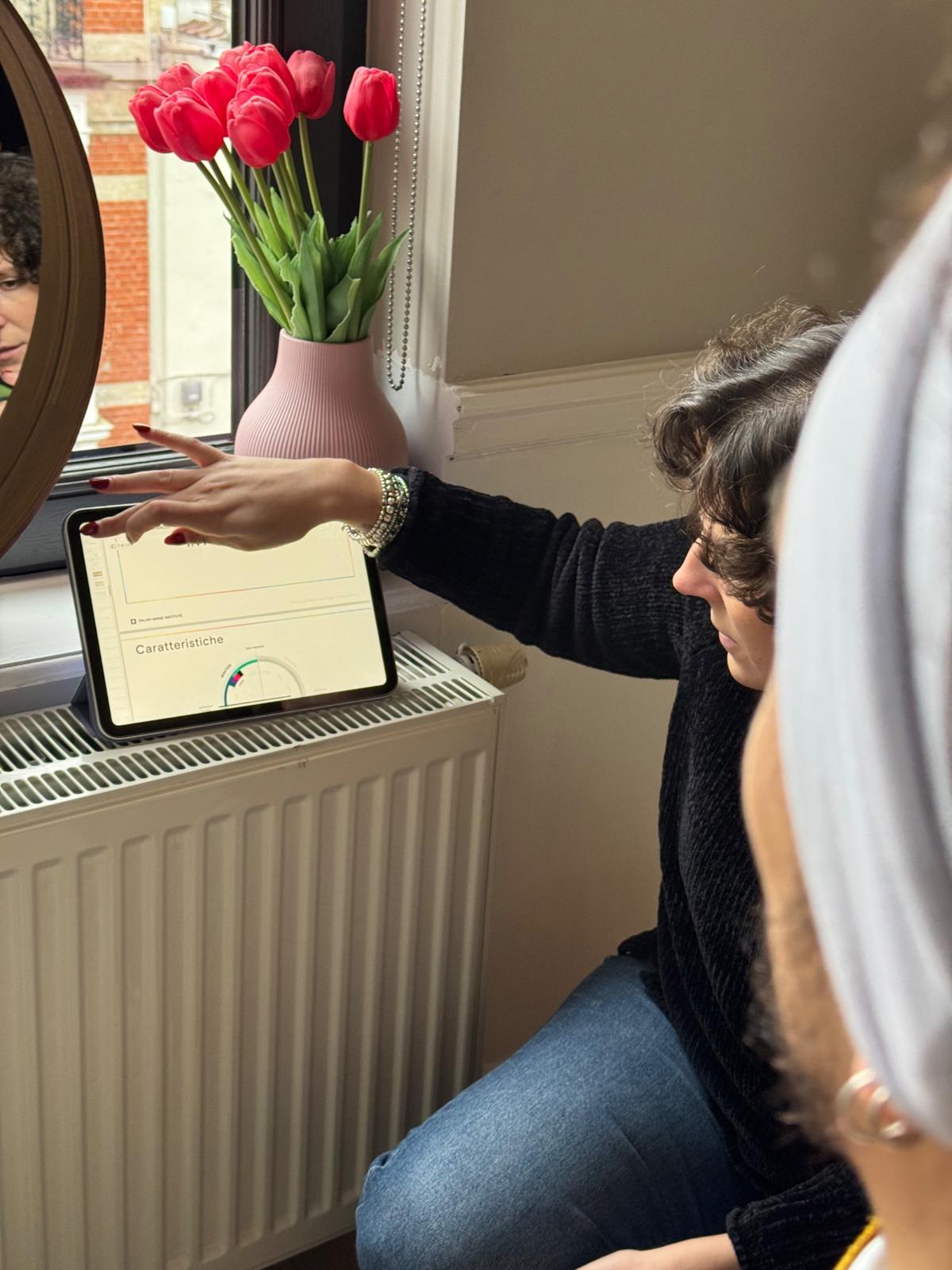 CIPICROMIE
Under the banner of image consulting, there are three distinct assessments, and they are often confused.
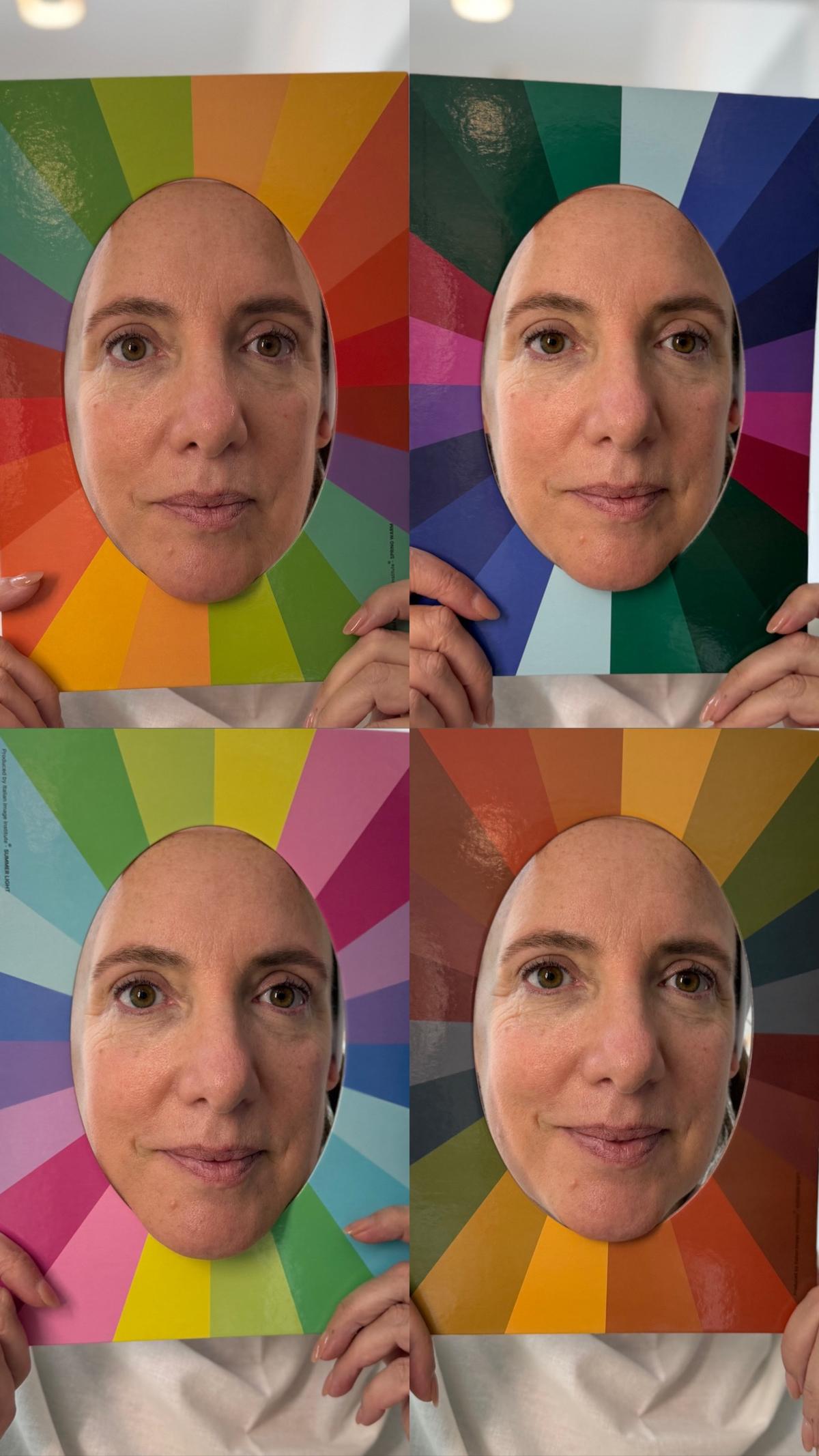
- Colour analysis looks at your natural colouring: skin tone, eyes, hair. It identifies the shades that illuminate your face and those that wash you out.
- Body shape analysis, or body shape, looks at your proportions: length of the torso and legs, shoulder line, waist, hips. It reveals which cuts and volumes create the balance you are looking for.
- Face shape analysis, or face shape, looks at the lines and proportions of the face. It is used for everything worn close to it: earrings, hairstyle, veil, glasses, shirt collar.
For a wedding, the three work in harmony. Colour determines the fabric, body shape determines the cut, and face shape determines the accessories. Looked at in isolation, each one leaves a blind spot.
The white of your dress is not just white
 CIPICROMIE
Bright white, ivory, champagne, cream, off-white: these are not synonyms, and it is not purely a matter of personal taste. Depending on your complexion, certain shades brighten the face, while others can make it look duller or accentuate shadows under the eyes.
This scenario comes up regularly in consultations, explains Camilla Petit: an engaged bride-to-be arrives set on bright white, tries on an ivory, and watches her features soften immediately. Same dress, same lighting, two completely different results.
This detail carries more weight than it might seem. A wedding photography collection in Belgium typically means 300 to 700 edited photos. Whatever happens with your complexion will show on every single one of them, and you will be looking at them for decades. Our benchmarks on wedding photographers in Belgium outline the rest of the key figures.
The suit, and especially what sits near the face
 CIPICROMIE
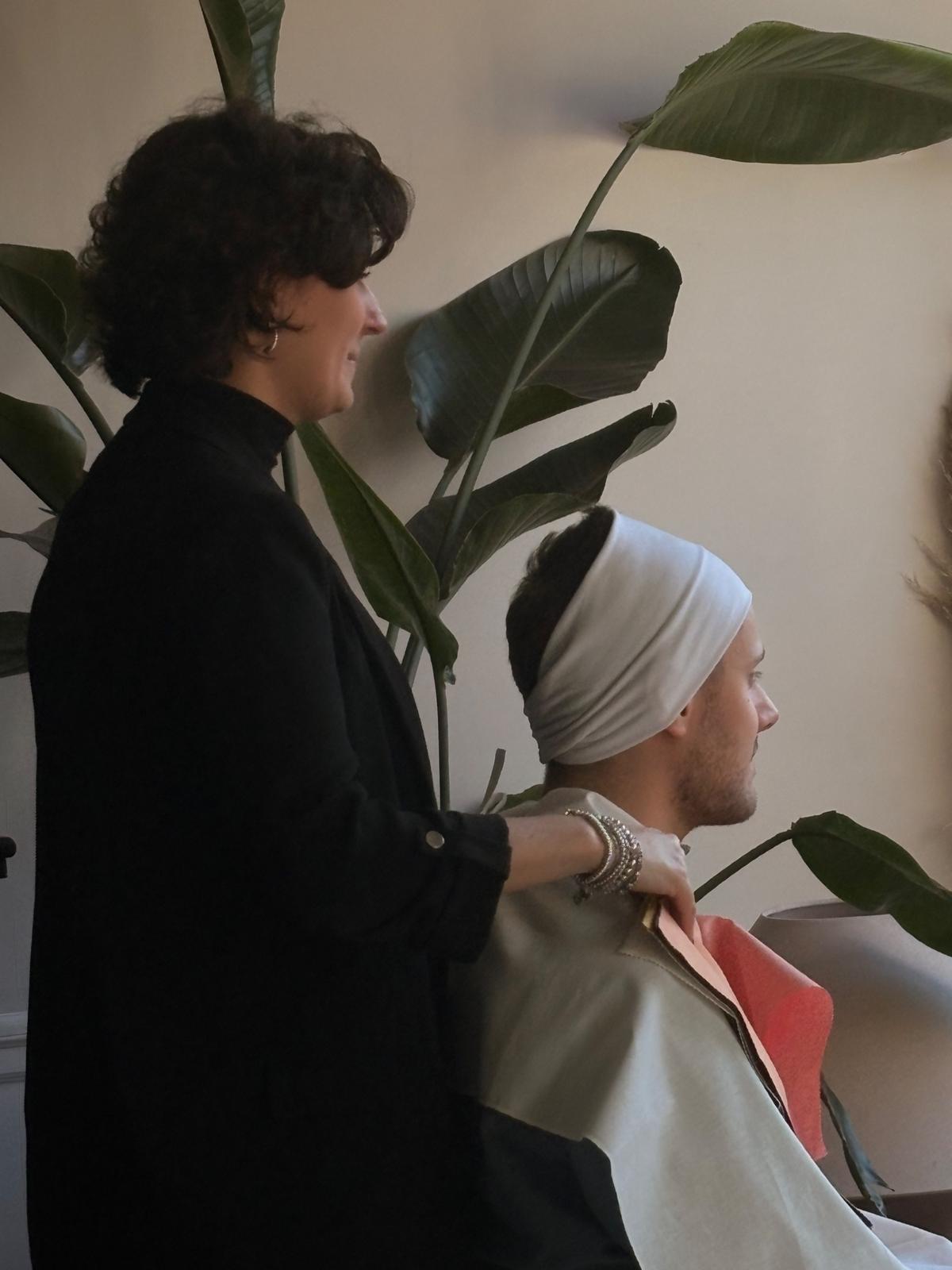
Navy blue, midnight blue, charcoal grey, beige, forest green, black: the colour of the suit deserves just as much care as that of the wedding dress, and is assessed in exactly the same way.
With one crucial distinction. The jacket sits slightly away from the face. The shirt, tie, bow tie and pocket square do not. That is where the colour truly stands out, and that is often what marks the difference between an acceptable outfit and one that genuinely flatters you.
For everything else, bespoke, ready-to-wear or hire, and the prices charged locally, our guide to the groom's suit breaks it all down.
The dress found on Pinterest, and the dress on you
You saved it six months ago, showed it to your witnesses, you know every single detail. Then comes the first fitting, and something does not work as planned.
Nothing unusual. We all have different proportions, and these proportions determine how a garment hangs. Mermaid, princess, empire waist, V-neck, strapless, voluminous sleeves: each element shifts the balance of a silhouette.
For suits, the same applies. A jacket that is too long visually shortens the legs, poorly tailored trousers throw off the whole look, and a few well-thought-out adjustments transform your appearance.
The key point is the one Camilla Petit repeats to her clients: an analysis forbids nothing. If you adore mermaid dresses even though another cut would better balance your proportions, you keep it. You will simply know what to adjust, and what elements around it will flatter it. Before stepping into a boutique, our guide to the wedding dress in Belgium gives real prices and lead times.
Jewellery, veil, hairstyle: it all happens near the face
You have the dress. That leaves the earrings, necklace, veil, hairstyle, hair accessories. This is often where things get complicated, because options multiply just as decision fatigue sets in.
Drop earrings or round designs. Short veil or cathedral veil. Hair up or down. Yellow gold or silver.
Two analyses provide the answer. Face shape shows which accessory shapes and which hairstyles produce the desired effect. Colour analysis reveals which metals, which stones and which shades harmonise with your natural colouring. Concrete result: two brides can wear the same dress and choose completely different jewellery, hairstyles and veils, both for good reason.
For the groom, the logic is the same: the shape of the glasses, the shirt collar, the size of the bow tie.
There is an underestimated benefit. You arrive at your hairstylist, makeup artist or designer with a vocabulary. You can articulate what you are looking for, without taking anything away from their expertise. Our guide to bridal hair and makeup details what is decided at the trial.
Coordinating as a couple without wearing the same colour
Your partner dreams of a forest green suit, you picture an ivory dress with champagne accessories. The two work together.
You do not need to wear the same colour to form a cohesive duo, and fortunately so: no one wants a wedding in uniform. What matters is how the shades come together.
The thinking extends to the witnesses, bridesmaids and ushers, and close family and friends who want to coordinate. Imposing an identical palette on eight people results in a uniform look and, often, three people feeling uncomfortable. Providing a family of shades, with some flexibility, creates a harmony that works both in person and in photos. If you opt for a dress code, our article on wedding guest attire shows where to draw the line.
When to do it, and how much it costs
The short answer: before the first fittings.
To be clear, in a Belgian timeline. Dress fittings generally start ten to twelve months before the wedding, and the order is placed eight to ten months before, because production takes four to six months, alterations not included. Camilla Petit schedules the appointment between nine and twelve months before the date, just before fittings begin. That is the only moment when it saves you time rather than costing you time. In your WEWED planner, this is the window preceding the Choose the dress task.
Prices charged in Belgium
These are the rates displayed in November 2026 by the only listing of this type in our directory. The complete package combines all three analyses for both partners and adds wedding styling codes. As everywhere else, only a personalised quote is binding.
And what if the outfit is already chosen? The consultation remains valuable for accessories, hairstyle and beauty styling, which is to say half of what is seen in the photos.
What remains after the big day
The reception venue, the caterer, the photographer: all of that ends the next day. Image consulting does not.
Your colour analysis continues to guide your purchases of clothes, makeup and jewellery. What you learn about your proportions benefits your work wardrobe as well as special occasions. What you learn about your face informs your next pairs of glasses and future hairstyles.
It is one of the few wedding budget items that still serves you three years later. You are not only preparing for a wedding, you are learning to know yourself better.
To find beauty suppliers near you, the WEWED directory lists them with no paid rankings.
Would you do it before fittings, or do you choose the dress first and adjust afterwards? 👇
Frequently asked questions about wedding colour analysis
What is colour analysis for a wedding?
An analysis that identifies, from your skin tone, eyes and hair, the shades that brighten your face. Applied to a wedding, it is mainly used to choose between whites, optic white, ivory, champagne, cream, the colour of the suit and the accessories worn close to the face.
When should you have a colour analysis before your wedding?
Before the first fittings. Camilla Petit advises an appointment between nine and twelve months before the date. Wedding dress fittings start ten to twelve months before and the order is placed eight to ten months before: past this point, the analysis no longer guides the main choice.
How much does an image consulting session cost in Belgium?
From 165 to 185 euros for a single analysis: face shape analysis from 165, body shape analysis from 170, colour analysis from 185. Full guidance for the couple is listed at 1 268 euros. These are the rates displayed in November 2026 by the only listing of this type on WEWED. Ask for a personalised quote.
Is it only for the bride?
No. The colour of the suit, shirt, tie or bow tie, the shape of the glasses and the shirt collar all involve the exact same analysis. They are even the items worn closest to the face.
Should you wear the same colour as your partner?
No, and it is preferable not to. Two outfits can coordinate without being identical: the goal is visual consistency, not an enforced palette. The same logic applies to the witnesses and the wedding party.
I have already chosen my wedding dress, is it still useful?
Yes, for everything that is not yet decided: jewellery, veil, hairstyle, make-up. That is half of what shows in photographs, and the part closest to your face.
This article was written with Camilla Petit, CiPiCROMIE, an image consultant in Brussels. The prices mentioned are those displayed on her WEWED listing in November 2026, without contractual value: only a personalised quote commits a supplier. The order and manufacturing lead times for dresses are those observed on the Belgian market in 2025-2026.