Getting Married to a Foreigner in Belgium: Documents, Deadlines, Visa, and Local Council Checks

Article summary
A quarter of weddings in Belgium unite a Belgian and someone of another nationality. Here are the documents to gather, local council checks, visa requirements, and realistic deadlines, without jargon.
Summarise with AI
You are Belgian, your partner is not, and you want to get married here. On paper, it's a right. In practice, it's an administrative journey that no one explains to you until you're already in it, with a pile of documents to translate and a local council asking specific questions about your story.
A wedding with a foreigner in Belgium, adheres to the same fundamental rules as any civil wedding, plus an additional layer of checks related to nationality and residency. Nothing insurmountable. But you need to know in advance which papers to gather, what the local council has the right to check, and how much time to allow. Here, we cover the most common case in Belgium: one Belgian or resident partner, and one partner of foreign nationality.
Transparency before we start: at WEWED, we don't just document the subject, we live it. I'm Belgian, my fiancée Morgan is Canadian, and we're right in the middle of it. So what follows is not just recycled theory.
Each local council applies the same regulations (Civil Code and rules of the Immigration Office), but the reception, appointment waiting times, and exact list of documents vary from one office to another. First reflex: call the civil registry department of your local council before gathering anything.
Wedding with a foreigner, Belgium: one in four couples

We often imagine that getting married to someone of another nationality remains an unusual case. That's false. According to StatBel, a significant proportion of weddings celebrated in Belgium unite a Belgian and a person of foreign nationality, about one in four. In 2024, the country registered almost 48,600 weddings, an increase on the previous year.
Your situation is therefore commonplace for the civil registrar. What isn't commonplace is your level of information: too many couples leave it three weeks before their dream date, when a certificate from abroad can take two months just to arrive legalised and translated.

We met in Quebec, on the last night of my first trip there. Love at first sight, a completely improbable evening, and three weeks later Morgan took her first flight to Europe to join me. We got engaged in February 2025. When I write above that one in four weddings in Belgium is binational, it's not an abstraction: it's us. Today Morgan is here on a Working Holiday Visa (PVT in French) for a year, she works here, and we are preparing our wedding. We are writing this guide with one foot in the registries.
Alessio & Morgan
The Foreign Partner's Documents, the Real Headache

The Belgian partner provides pretty much the same documents as for any civil wedding: proof of identity and a recent copy of their birth certificate, nothing new compared to the standard documents to submit to the local council. It's on the foreign partner's side that the list gets longer. Generally, the local council requests:
Documents required from the foreign partner
The certificate of custom is the most confusing document. It's a certificate that confirms the wedding rules of the country of origin, so that the local council can verify that the union is also valid there. It is most often obtained from the embassy or consulate of the country concerned, sometimes via the SPF Justice. The certificate of celibacy (or non-impediment to marriage) plays a similar role: it guarantees that the person is not already committed elsewhere.
Frankly, this is where most of the work lies. Some countries issue these documents in a week, others have no exact equivalent and impose a substitute procedure that the local council or a notary will inform you about. Never assume that "it will be sorted out on site".
Legalisation, Apostille, and Sworn Translation: The Step Often Forgotten
A foreign document is not valid in Belgium until it has been authenticated. There are two ways, depending on the issuing country. If the country has signed the Hague Convention, an apostille affixed by the competent authority is sufficient. Otherwise, a chain legalisation is required, often by the Belgian embassy in the country of origin before the file is submitted.
And that's not all. Every document written in a language other than French, Dutch, or German must be accompanied by a sworn translation, which itself sometimes needs to be legalised. A birth certificate in Arabic, Russian, or Portuguese will therefore have to travel, be stamped, then translated by a sworn translator recognised in Belgium.
Having it translated first, then legalised. It's often the other way around: you legalise or apostille the original, then you translate everything. Check the order with your local council before paying a translator.
The Sham Wedding Control by the Local Council
This is the most worrying and most misunderstood point. The registrar has a duty to verify that the wedding is not what the law calls a sham wedding, or a marriage of convenience. The legal basis is Article 146bis of the Civil Code: there is no wedding when the intention of at least one of the spouses manifestly aims, not to create a lasting community of life, but only to obtain a residence advantage.
Clearly, the local council can open an investigation: interview you, together or separately, ask questions about your meeting and your daily life. In case of doubt, the officer can suspend the celebration and request the opinion of the Public Prosecutor. This control is normal, it does not mean that you are personally suspected.
A sincere couple responds simply, honestly. But let's be realistic: this moment can be experienced as intrusive, especially when an age or language difference draws the attention of the counter staff. If necessary, your witnesses can attest to the reality of your relationship.
Coming to Belgium to Get Married: The D Visa
If your partner still lives abroad and does not have a Belgian residence permit, they cannot simply arrive to get married. Depending on their nationality, they will need a visa. For a wedding project on Belgian soil, the Immigration Office provides a D visa for the purpose of getting married or cohabiting.
This visa is requested at the Belgian diplomatic post in the country of residence. You must prove the seriousness of the project: wedding file already started at the local council, proof of the relationship, sometimes proof of resources and accommodation. If granted, it allows entry into Belgium to formalise the union.
Please note: a short-stay visa national cannot get married with a simple tourist visa by diverting its purpose. The local council and the Immigration Office examine the consistency between the purpose of the stay and the actual project.
After the wedding: family reunification
Getting married does not automatically grant a right of permanent residence. Once the union has been celebrated, the foreign spouse generally applies for a residence permit under family reunification. For the spouse of a Belgian national, the law sets out conditions: a minimum age of 21 years in principle, stable and sufficient resources, accommodation, and health insurance.
The first permit is temporary: the administration can, for several years, verify that cohabitation is real before granting a longer stay. A useful reminder: marriage does not oblige anyone to change their name, and we have detailed elsewhere what changes regarding names after marriage.
Getting married abroad, then transcribing the certificate in Belgium

Many bi-national couples choose to celebrate their wedding in one of the partners' countries of origin. This is perfectly possible. But a marriage concluded abroad only takes effect in Belgium after being transcribed into the Belgian civil status registers.
In practice, you submit a copy of the wedding certificate, apostilled or legalised, translated if necessary, and request its transcription at your local council or consular post. Without this step, the certificate remains invalid here: no recognition of the marriage, no family reunification based on it. Our checklist for a destination wedding from Belgium helps avoid unpleasant logistical surprises.
How much time to allow, really
- Gathering foreign documents: from a few weeks to 2-3 months depending on the country.
- Legalisation or apostille + sworn translation: add several weeks.
- Simulated marriage investigation (if triggered): often 2 to 5 months, including prosecutor's opinion.
- Visa D for marriage purposes: several months, to be anticipated well in advance.
After the administration, the actual day
All this paperwork has a purpose, and it's not the paperwork itself. Once the file is validated and the date set, you organise a wedding like any other, often with the desire for a ceremony that tells the story of two cultures, two languages, two families coming together.
 MYSA-EVENTS
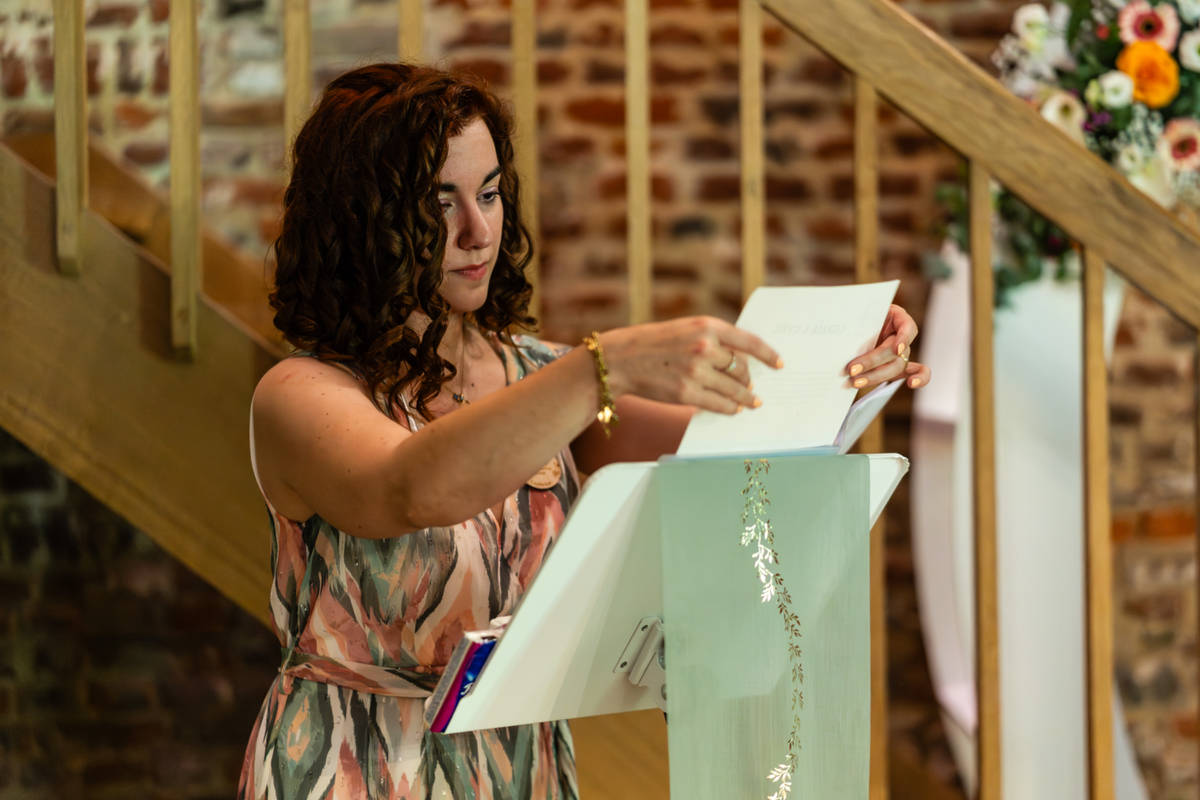
Beyond the compulsory civil wedding, an officiant like MYSA-Events (La Louvière) can build a tailored humanist ceremony, in two languages, so that no one feels left out. We detail the method in our guide on custom humanist ceremonies in Belgium.
 CHÂTEAU D'AVONDANCE
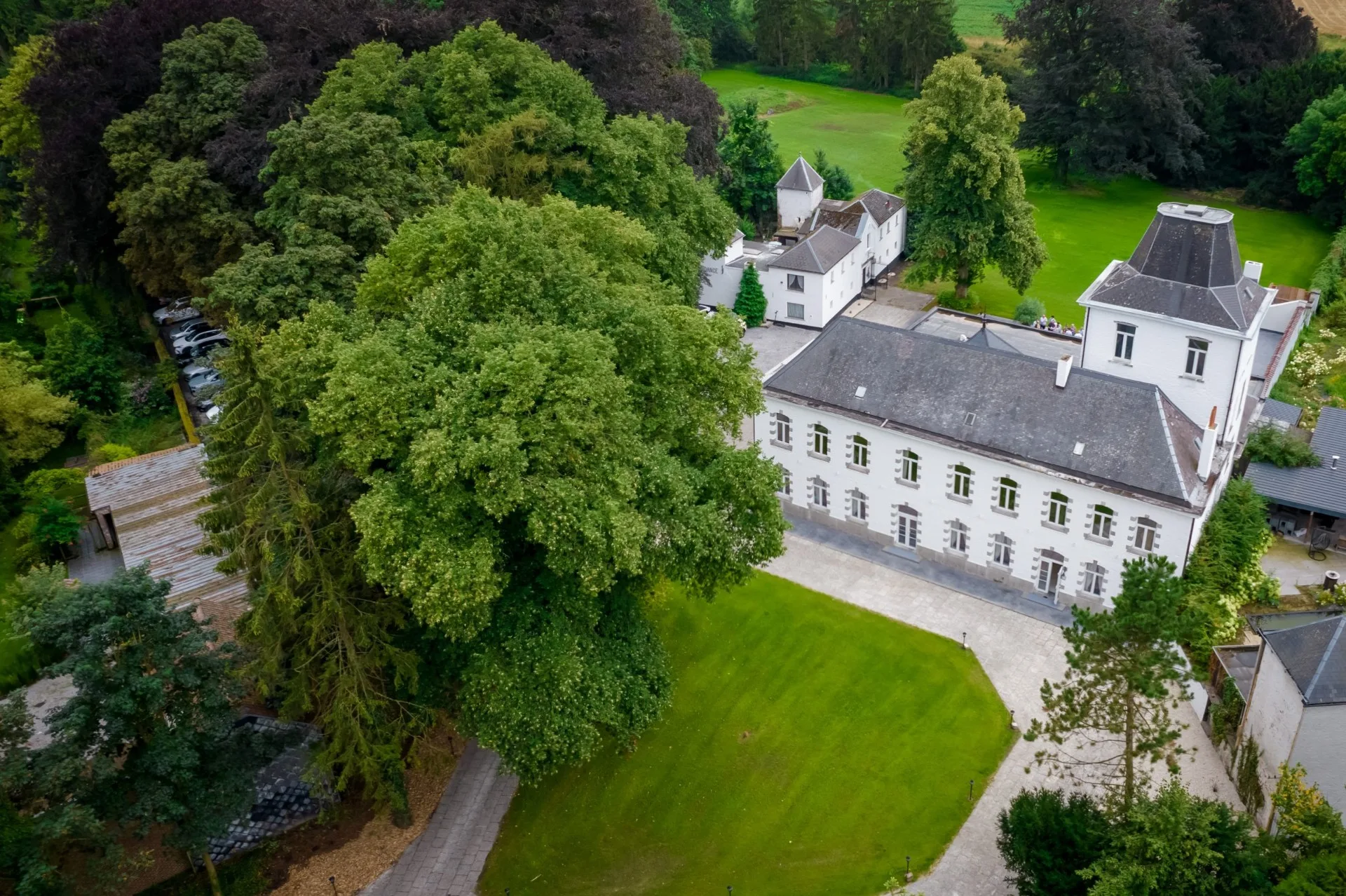
The choice of venue is doubly important when part of the family is crossing a border: an estate with on-site rooms, like Château d'Avondance in La Louvière, spares your loved ones from afar the hassle of hotel logistics. Compare them in the Belgian supplier directory.
 POP PRODUCTIONS
One last practical tip: video is not a luxury for a bi-national couple. A videographer like POP Productions (Erbisœul) allows relatives who stayed in their home country to experience the day afterwards, often the most watched gift of the entire wedding.
Where are we now? At the very beginning of the wedding file: Morgan's birth certificate has been apostilled, the rest will follow, because we are getting married next year, probably in 2027, before her Working Holiday Visa ends. And yet, the stay alone has already challenged us, even before discussing the wedding.
After she finally obtained her Visa D, she then had the obligation to report to the local council within 8 days. We rushed there, they sent us to the immigration office, "and come early." We were there at 6:30 am: more than 45 people already in the queue, an unbelievable tension, two fights almost breaking out in front of us. At the counter, the verdict: a minimum of two months for the residence permit. In the meantime, an Annexe 15, but without a national number. And a compulsory police visit to the home to verify that she actually lives there, except we were almost never home, busy finding her a job. The officer visited while we were out: several days lost waiting at home. An employer finally said yes, but requested the national number she didn't have yet; a phone call to the immigration service, which connected us to the right person at the local council. Today she works and everything is sorted. But "complicated" remains an understatement, and that's exactly why we built WEWED: to make this journey a little less solitary.
An international wedding needs early planning
Centralise your budget, guest list, and suppliers in one place, and receive automatic email reminders for every deadline, from submitting your application to the local council until the big day.
Organise my wedding on WEWED →And you, paperwork first or venue first? Tell us about your double file, administrative and family. 👇
Frequently Asked Questions about getting married to a foreigner, Belgium
What documents does my foreign partner need to provide to get married in Belgium?
Generally: a legalised or apostilled birth certificate, proof of identity and nationality, a certificate of custom, and a certificate of celibacy (or non-impediment to wedding). Any document in a language other than French, Dutch, or German requires a sworn translation. The exact list should be confirmed with your local council.
What is a certificate of custom?
This is a certificate confirming the wedding rules of the partner's country of origin, so that the Belgian local council can verify that the union is also valid there. It is most often obtained from the relevant embassy or consulate, sometimes via the FPS Justice.
Can the local council refuse or delay our wedding?
Yes, within a specific framework. The registrar must verify that it is not a sham marriage as defined by Article 146bis of the Civil Code: investigation, hearing, suspension of the celebration, opinion of the King's prosecutor. A sincere couple answers honestly, and the case proceeds.
My partner lives abroad: how do they come here to get married?
If they require a visa, they should apply for a Type D visa for the purpose of getting married or cohabiting at the Belgian diplomatic post in their country. A wedding file must already be initiated, and proof of the relationship is required. A simple tourist visa cannot be misused to get married.
Does getting married automatically grant a right of residence?
No. After the wedding, the foreign spouse applies for a residence permit under family reunification, subject to conditions (age, resources, accommodation, insurance). This initial permit is temporary: the administration verifies the reality of the cohabitation for several years.
We are getting married in my partner's country: is it valid in Belgium?
Not automatically. A wedding celebrated abroad must be transcribed into the Belgian civil status registers to be effective here. You bring the apostilled or legalised wedding certificate, translated if necessary, and request its transcription at your local council or consular post.
Official Belgian sources: the Immigration Office (dofi.ibz.be) for visas for wedding purposes and family reunification, the FPS Foreign Affairs (diplomatie.belgium.be) for legalisation and apostille, Article 146bis of the Civil Code on ejustice.just.fgov.be, and StatBel (statbel.fgov.be) for figures. The timelines cited are estimates observed in early 2026: your local council and diplomatic post remain the reference for your file. Nothing here replaces individualised legal advice.